
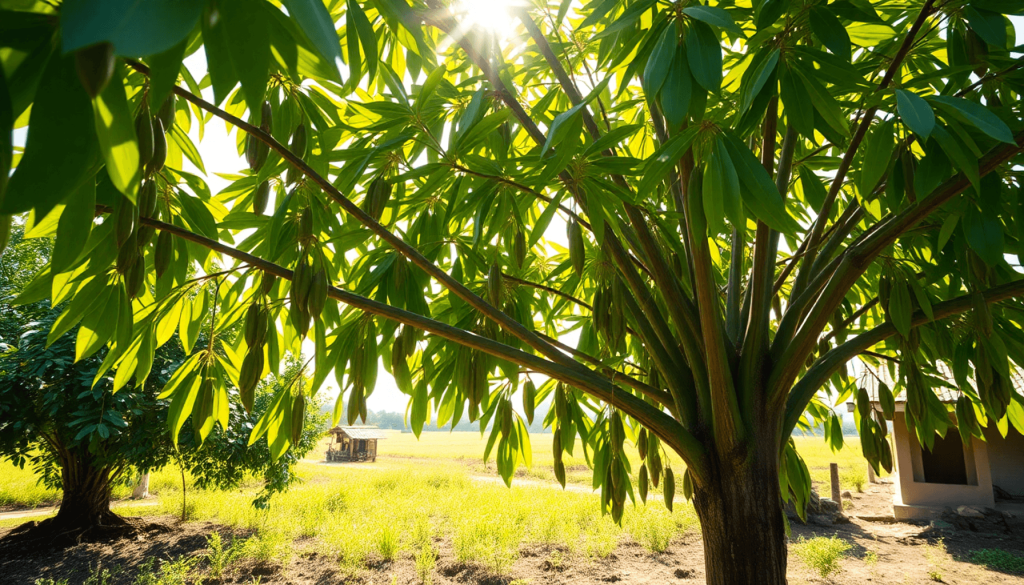
Moringa, often called the “Tree of Life,” stands out for its incredible health benefits and crucial role in protecting the environment. Furthermore, this adaptable plant thrives in Indonesia’s various climates, consequently providing a natural solution to some of the country’s most urgent problems.
Moreover, Moringa contains abundant nutrients that boost immunity, support maternal health, and promote optimal child health. Additionally, its leaves, seeds, and pods deliver powerful sources of vitamins, minerals, antioxidants, and essential amino acids.
Beyond its health benefits, Moringa also supports sustainable farming practices. Notably, it withstands dry conditions and improves soil quality, thereby helping to prevent land degradation and promote biodiversity. As a result, this dual ability makes Moringa an essential resource for Indonesia’s future.
Therefore, this article explores how this extraordinary tree supports Indonesia’s journey toward improved well-being and sustainability.
The Origins and Traditional Uses of Moringa in Indonesia
Indonesian communities have cultivated Moringa for many years, with cultivation dating back several hundred years. Indeed, its ability to flourish in different climates made it an important plant for rural communities. Traditionally, moringa served not only as a valuable food source but also played a significant role in local medicine and customs.
Historical Cultivation
Indigenous farmers recognized moringa’s resilience and nutritional value early on. Subsequently, it became a staple in subsistence agriculture, especially in regions facing challenges like soil degradation and drought.
Traditional Applications
Throughout history, communities have used Moringa in various ways:
Food: Cooks commonly prepared leaves into vegetable dishes or dried and ground them into powder to enrich meals.
Medicine: Healers used moringa to treat inflammation, wounds, and digestive issues, thus reflecting its anti-inflammatory properties that scientific research confirms today.
Local Practices: Communities utilized moringa seeds and oils in skin care rituals due to their reputed anti-aging effects.
Cultural Significance
In many rural areas of Indonesia, moringa represents vitality and well-being. Furthermore, its presence in household gardens signifies both practical health benefits and a cultural connection to nature. Additionally, the tree often plays a role in community reforestation efforts aimed at combating deforestation, thereby illustrating its broader environmental importance alongside traditional values.
Ultimately, this combination of historical knowledge and cultural respect highlights moringa’s significance beyond nutrition—connecting health, heritage, and sustainability across generations.
Nutritional Powerhouse: Exploring the Health Benefits of Moringa
Moringa functions as a nutritional powerhouse, offering a plethora of health benefits that scientific research has supported. Therefore, let’s delve into the key points:
1. Nutritional Value
Moringa serves as a treasure trove of essential nutrients. Specifically, it provides rich amounts of vitamins A, C, and E, which are crucial for maintaining overall health. Additionally, it boasts high mineral content including iron, calcium, and potassium, essential for various bodily functions. Furthermore, packed with antioxidants, protein, and amino acids, Moringa stands as a well-rounded superfood.
2. Health Benefits
Scientific studies have highlighted several health benefits that Moringa consumption provides:
Combating Malnutrition: Moringa’s nutrient density makes it an ideal supplement for combating malnutrition, particularly in resource-limited settings.
Boosting Immunity: The immune-boosting properties of Moringa can help fight off infections and diseases.
Supporting Maternal and Child Health: Moringa’s rich nutrient profile particularly benefits expectant mothers and growing children, consequently aiding in healthy development.
Anti-inflammatory and Anti-aging Properties: Moringa contains compounds that exhibit anti-inflammatory effects and help combat signs of aging.
As a result, by incorporating Moringa into daily diets, individuals can enhance their overall well-being and address specific health concerns effectively. Moreover, its diverse array of nutrients makes it a valuable addition to promote a healthy lifestyle.
Moringa’s Role in Promoting Environmental Sustainability
In Indonesia, Moringa plays a crucial role in promoting environmental sustainability through its unique properties and farming practices:
1. Drought-Resistant Properties
Moringa demonstrates remarkable ability to thrive in arid conditions, consequently making it a valuable asset in regions prone to drought. Furthermore, its deep root system allows it to access water sources that other plants cannot reach, thus ensuring its survival even in challenging environments.
2. Soil Enrichment and Prevention of Erosion
Moringa cultivation helps improve soil quality by enhancing its nutrient content. As a nitrogen-fixing plant, Moringa enriches the soil, thereby making it more fertile for other crops. Additionally, the dense root network of Moringa helps bind the soil together, consequently reducing erosion risks and preserving valuable topsoil.
3. Promoting Eco-Friendly Agriculture
Moringa farming practices align with principles of sustainable agriculture. Specifically, by requiring minimal water and chemical inputs, Moringa cultivation reduces the environmental impact typically associated with conventional farming methods. Therefore, this eco-friendly approach contributes to the preservation of natural resources and biodiversity.
4. Enhancing Climate Resilience
As climate change poses significant challenges to agriculture, the resilience of Moringa becomes increasingly important. Moreover, its adaptability to various climatic conditions and resistance to pests and diseases make it a reliable crop choice for farmers facing unpredictable weather patterns. Consequently, by incorporating Moringa into agricultural systems, communities can build resilience against climate-related risks.
Therefore, by harnessing the environmental benefits of Moringa, Indonesia can work towards a more sustainable future characterized by improved soil health, water conservation, and climate resilience. Furthermore, the integration of Moringa into agricultural practices not only enhances food security but also contributes to ecosystem restoration and biodiversity conservation.
Ultimately, through strategic cultivation and utilization of Moringa, Indonesia can pave the way for a greener and more sustainable agricultural landscape that benefits both people and the planet.
Empowering Small-Scale Farmers: Economic Impact and Global Market Potential
Moringa cultivation offers significant economic opportunities for small-scale farmers across Indonesia. Moreover, its adaptability to diverse climates and low input requirements make it an accessible crop for rural communities. Additionally, farmers can cultivate moringa with minimal investment, thereby reducing financial barriers common in other agricultural ventures.
Economic benefits for small-scale farmers include:
Increased income streams: Multiple parts of the moringa tree—leaves, seeds, pods—can generate revenue through harvesting and sales, consequently allowing diversification.
Job creation: Processing moringa into powders, teas, oils, and health supplements generates employment beyond farming, including packaging and marketing opportunities.
Empowerment of women and youth: Many community initiatives train women and young entrepreneurs in moringa-based product development and sales, thus promoting financial independence.
Resilience against market fluctuations: Moringa products often target health-conscious consumers who pay premium prices, therefore providing more stable income compared to staple crops.
Furthermore, Indonesia’s position in the global market highlights growing demand for natural superfoods. Additionally, Moringa-based products have gained popularity internationally due to their nutritional richness and versatility.
Key global market segments include:
Powders: Consumers use these as dietary supplements or add them to smoothies and foods for a nutrient boost.
Teas: Marketers promote these for antioxidant properties and wellness benefits.
Oils: Producers extract these from seeds, and industries value them in cosmetics and cooking.
Health supplements: Capsules or tablets concentrate moringa’s bioactive compounds targeting immune support and anti-inflammatory effects.
Moreover, global consumer trends favor organic and sustainably sourced products, which can increase Indonesia’s competitive advantage if producers adopt eco-friendly practices. Additionally, exporting moringa-based goods opens pathways for rural communities to integrate into international supply chains, thereby amplifying economic impact.
However, challenges remain in scaling production while maintaining quality standards that export markets require. Therefore, investment in processing infrastructure, training on certification processes, and strengthening cooperative models can enhance farmers’ capacity to meet global demand. Furthermore, partnerships between government agencies, NGOs, and private enterprises play a crucial role in expanding market access and ensuring fair trade principles.
Ultimately, Moringa’s economic potential intertwines with its environmental benefits. As farmers embrace sustainable cultivation methods discussed earlier, they contribute not only to their livelihoods but also to long-term ecological health. Consequently, this dual advantage positions moringa as a powerful catalyst for rural development in Indonesia.
Challenges and Opportunities for the Future
Moringa cultivation and consumption in Indonesia face several challenges that limit their full potential. Specifically, key barriers include:
- Limited awareness among farmers and consumers about Moringa’s health benefits and sustainable farming techniques.
- Lack of standardized cultivation practices which can lead to inconsistent product quality.
- Insufficient infrastructure for processing, packaging, and distribution, consequently restricting market reach.
- Ethical production concerns, including fair labor practices and environmental impact, require more attention.
- Policy gaps where government incentives or support programs for Moringa remain underdeveloped.
- Competition from established crops and alternative superfoods that overshadow Moringa in local markets.
Therefore, addressing these challenges requires a multi-faceted approach focused on promoting awareness, encouraging sustainable farming, ensuring ethical production, fostering government support, driving innovation, and enhancing international collaboration.
Strategies to Unlock Moringa’s Potential
Raising Awareness: Educational campaigns targeting rural communities and urban consumers to highlight Moringa’s nutritional and environmental value. Additionally, integration into school curricula and public health programs can normalize consumption.
Promoting Sustainable Farming Practices: Training farmers in organic cultivation methods that preserve soil quality and biodiversity. Furthermore, development of community seed banks maintains genetic diversity of Moringa varieties.
Establishing Ethical Production Standards: Certification schemes verify fair trade practices and environmental responsibility. Moreover, encouraging cooperatives empowers smallholders with better bargaining power.
Government Support: Subsidies or grants for farmers investing in Moringa cultivation infrastructure. Additionally, policies incentivizing research into optimized growing techniques adapted to Indonesia’s diverse climates prove essential.
Innovation in Product Development: Research into new Moringa-based products tailored for domestic tastes and export markets. Furthermore, leveraging digital platforms for marketing, supply chain transparency, and direct farmer-to-consumer sales enhances reach.
International Collaboration: Partnerships with global research institutions improve crop resilience against climate change. Moreover, accessing international funding sources aimed at sustainable agriculture initiatives provides crucial support.
Ultimately, these strategies collectively create pathways for expanding Moringa’s adoption while ensuring it contributes positively to Indonesia’s health, environment, and economy in a sustainable manner.
Conclusion
Moringa serves as a remarkable catalyst for growth and hope in Indonesia’s quest to improve health and environmental sustainability. Furthermore, its unique combination of nutritional richness, environmental resilience, and economic potential makes it a vital resource for the nation.
You can use Moringa to:
- Combat malnutrition and strengthen community health, especially among vulnerable populations like mothers and children.
- Promote sustainable agriculture and climate adaptation through its environmental benefits such as drought resistance and soil enrichment.
- Empower rural farmers economically by providing them with new opportunities for income, skill development, and market access on both local and global scales.
The story of Moringa in Indonesia represents more than just a tree; it embodies cultivating hope—hope for healthier generations, more resilient ecosystems, and thriving livelihoods. Therefore, by embracing Moringa’s full potential with supportive policies, innovation, and inclusive practices, you contribute to a future where health and sustainability grow hand in hand.
Consequently, this dual impact makes Moringa more than a superfood; it becomes a powerful symbol of positive change—a beacon lighting the path toward a better Indonesia. Ultimately, the promise embedded in every leaf invites you to join this transformative journey.
FAQs (Frequently Asked Questions)
Moringa functions as a nutrient-rich tree that people know as the ‘Tree of Life’ due to its immense health and environmental benefits. Furthermore, in Indonesia, it plays a vital role in boosting immunity, supporting maternal and child health, and promoting sustainability.
Moringa functions as a nutrient-rich tree that people know as the ‘Tree of Life’ due to its immense health and environmental benefits. Furthermore, in Indonesia, it plays a vital role in boosting immunity, supporting maternal and child health, and promoting sustainability.
Moringa serves as a nutritional powerhouse rich in vitamins A, C, E, minerals like iron, calcium, potassium, antioxidants, protein, and essential amino acids. Additionally, scientific research supports its effectiveness in combating malnutrition, boosting immunity, enhancing maternal and child health, and providing anti-inflammatory and anti-aging benefits.
Moringa supports environmental sustainability by demonstrating drought-resistant properties, enriching soil quality, preventing erosion, and promoting eco-friendly agricultural practices. Furthermore, its cultivation enhances climate resilience and provides livelihoods for local farmers, consequently making it a key component in sustainable development strategies.