
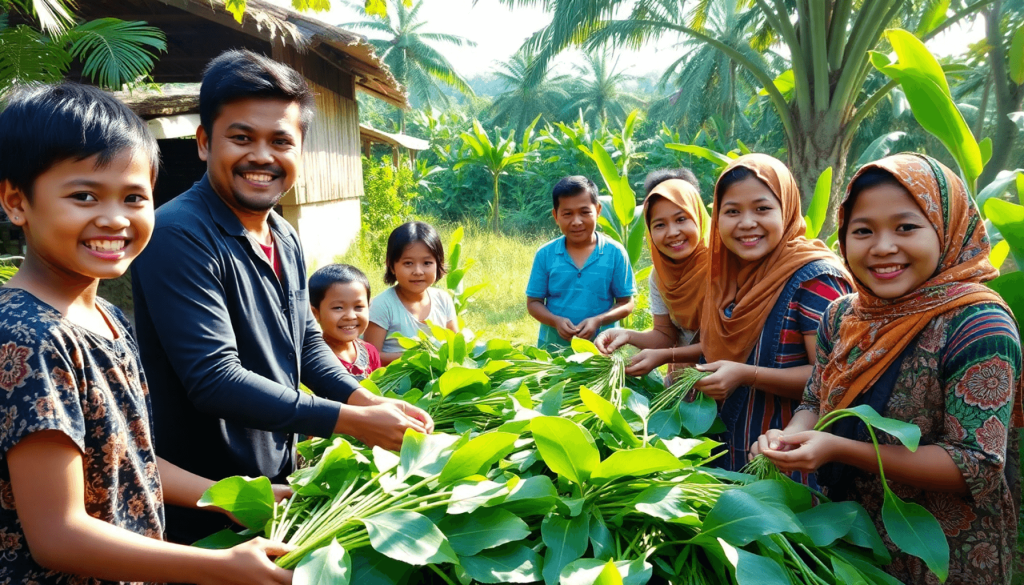
Malnutrition is a pressing issue in rural Indonesian communities, particularly affecting children under five. Moringa oleifera, known as a nutrient-dense ‘superfood’, holds promise in addressing malnutrition. This article delves into Moringa’s nutritional benefits and its transformative impact on Indonesian communities’ health and wellbeing.
The Nutritional Power of Moringa
Moringa oleifera, known as the ‘miracle tree,’ has an impressive nutritional profile that makes it a powerful tool against malnutrition in Indonesian communities. Here’s a closer look at the nutrients packed within Moringa leaves:
1. Vitamins
Moringa leaves are rich in essential vitamins, surpassing common sources like carrots and oranges. They contain high levels of:
- Vitamin A: Crucial for vision and immune function
- Vitamin C: Supports immunity and collagen production
- Vitamin E: A powerful antioxidant protecting cells from damage
2. Minerals
Moringa is a mineral powerhouse, containing more calcium than milk for strong bones and teeth. It also offers potassium for heart health and muscle function, along with iron to prevent anemia, addressing widespread iron deficiency in vulnerable populations.
3. Antioxidants
The presence of antioxidants in Moringa leaves helps combat oxidative stress, reducing the risk of chronic diseases and supporting overall well-being.
4. Protein Content
Moringa is a complete protein source, containing all essential amino acids vital for growth, repair, and maintenance of body tissues. This makes it an excellent plant-based protein option for vegetarians and vegans.
Scientific research has shown that Moringa supplementation can improve nutritional status and health outcomes. Its role in addressing malnutrition goes beyond meeting dietary needs; it contributes to food security by providing crucial nutrients that are often lacking in traditional diets. Additionally, the cultivation of Moringa promotes environmental conservation due to its ability to thrive in diverse conditions with minimal water requirements.
This superfood not only nourishes bodies but also has the potential to transform communities by improving health outcomes and promoting sustainable practices.
Moringa’s Role in Combating Malnutrition in Indonesia
In rural areas of Indonesia, Moringa-based foods and supplements play a crucial role in improving the diets of malnourished children and adults. The nutrient-rich profile of Moringa makes it a valuable resource in addressing malnutrition challenges. Specifically, Moringa is important for supporting maternal nutrition during pregnancy and breastfeeding, which has a significant impact on child development outcomes.
Innovative Approaches to Combat Malnutrition
Community nutrition programs in Indonesia have successfully integrated dried Moringa leaf powder into meals and snacks, showcasing innovative ways to combat malnutrition. For example, fortified biscuits like BIMA-X have been introduced as a nutritious snack option enriched with Moringa’s benefits. These initiatives not only provide affordable nutrition but also offer sustainable solutions to improve health outcomes among vulnerable populations.
Positive Impact on Health and Well-being
The use of Moringa-based products has shown promising results in improving overall health and well-being in Indonesian communities. By leveraging the nutritional power of Moringa, organizations and local stakeholders are making significant progress towards combating malnutrition and enhancing child health through accessible and locally sourced solutions.
Moringa Farming in Rural Indonesia: Cultivation and Community Impact
The cultivation of Moringa in rural Indonesia plays a crucial role in addressing malnutrition while also benefiting local communities and the environment. Here are the key points to consider:
1. Adaptability to Local Growing Conditions
Moringa stands out for its remarkable adaptability to diverse growing conditions, making it particularly suitable for regions with limited water resources and challenging climates. Its inherent drought resistance and minimal input requirements make it an ideal crop for small-scale farmers in rural Indonesia.
2. Role of Small-Scale Farmers
Small-scale farmers are at the forefront of cultivating Moringa as a sustainable crop. By incorporating Moringa into their farming practices, these farmers not only improve soil quality through nitrogen fixation but also contribute to environmental conservation efforts. The cultivation of Moringa serves as a dual-purpose solution by providing nutrient-rich food sources and enhancing soil fertility.
3. Empowerment Through Local Farming Initiatives
Local farming initiatives centered around Moringa cultivation empower communities by creating opportunities for job creation and income generation. As low-income families engage in Moringa farming, they not only secure a sustainable source of nutrition but also establish economic stability through the sale of Moringa products. This holistic approach fosters self-reliance and resilience within communities while combating malnutrition.
Through the lens of sustainable agriculture and community empowerment, Moringa farming emerges as a transformative strategy in the fight against malnutrition in Indonesian communities. By nurturing local farming practices and leveraging the nutritional benefits of Moringa, these initiatives pave the way for lasting change and improved well-being among vulnerable populations.
Community Programs and Partnerships Driving Nutrition Innovation
Non-governmental organizations (NGOs) and government agencies play a crucial role in raising awareness about Moringa’s nutritional benefits within Indonesian communities. Through targeted education campaigns, these entities disseminate vital information on how Moringa can improve health outcomes, especially for vulnerable groups like children and mothers.
Community programs often integrate nutrition counseling with the distribution of Moringa-enriched foods. These initiatives educate families on preparing meals using Moringa leaf powder while providing direct access to fortified products. Such efforts ensure that nutritional improvements go beyond awareness to practical application.
Key features of these programs include:
- Collaborative partnerships among local health workers, NGOs, and government bodies to expand reach.
- Establishment of distribution networks that deliver Moringa supplements efficiently to rural areas.
- Focus on vulnerable populations, prioritizing pregnant women, breastfeeding mothers, and children under five.
Examples from Indonesian rural regions demonstrate how combining education with accessible Moringa products leads to measurable improvements in nutrition. This model encourages sustainable behavior change by embedding knowledge and resources directly into the community fabric.
Scaling Production and Expanding Markets for Sustainable Impact
Meeting the rising demand for moringa products requires focused efforts on production scaling and robust infrastructure development. Smallholder farmers face challenges in increasing yield without compromising quality. Adoption of improved farming techniques, such as optimized planting densities and integrated pest management, helps boost productivity while maintaining sustainable farming practices.
Key challenges in scaling production include:
- Access to quality seedlings and technical training for consistent crop output.
- Limited mechanization that slows harvesting and post-harvest handling.
- Seasonal fluctuations impacting steady supply to markets.
Developing infrastructure is critical for transforming raw moringa leaves into market-ready products. Efficient processing facilities ensure nutrient retention and food safety during drying, grinding, and packaging stages. Proper storage solutions help extend shelf life and reduce spoilage, which is vital for reaching both domestic and export markets.
Transportation networks also play a significant role in connecting rural producers with urban centers and global buyers. Investments in cold chain logistics and reliable distribution channels lower costs and improve product availability.
Expanding into global markets opens new opportunities but demands adherence to international quality standards and certifications. Building partnerships with private sector players can facilitate access to these markets while supporting local communities through fair trade practices.
This combination of enhanced production capacity and strong infrastructure lays the foundation for moringa’s sustainable impact—benefiting health, environment, and livelihoods across Indonesia.
Conclusion
Fighting malnutrition in Indonesian communities requires solutions that are both effective and sustainable. Moringa cultivation stands out by offering a dual benefit: it enhances nutrition while supporting local farmers and the environment. This approach fosters resilience in rural areas by improving soil quality and creating income opportunities, making moringa more than just a nutrient source—it becomes a catalyst for community empowerment.
Key points to remember:
- Sustainable nutrition solutions rely on local farming practices that protect natural resources and promote economic stability.
- Investing in education programs ensures communities understand moringa’s health benefits and how to incorporate it into daily diets.
- Scaling initiatives must continue expanding production capacity and market access to meet increasing demand without compromising quality or sustainability.
- Strong partnerships among NGOs, government bodies, farmers, and health workers are essential to maintain momentum and amplify impact.
The story of Fighting Malnutrition: How Moringa Is Changing Lives in Indonesian Communities is still unfolding. Your support—whether through advocacy, funding, or participation—can help sustain these efforts and transform public health outcomes for vulnerable populations across Indonesia. Together, we can harness the power of moringa to build healthier futures from the ground up.
FAQs (Frequently Asked Questions)
Malnutrition refers to the lack of proper nutrition caused by insufficient or unbalanced intake of nutrients. In rural Indonesian communities, especially among children under five, malnutrition leads to vitamin deficiencies, stunted growth, and increased vulnerability to diseases, significantly impacting public health and development.
Moringa oleifera is a nutrient-dense ‘superfood’ rich in vitamins A, C, E, essential minerals like calcium and iron, antioxidants, complete proteins including essential amino acids. Its high nutritional profile makes it an accessible and effective solution to improve nutritional status and fight malnutrition in Indonesian communities.
Moringa-based foods and supplements are integrated into diets of malnourished children and adults, with particular emphasis on supporting maternal nutrition during pregnancy and breastfeeding. Community nutrition programs incorporate dried Moringa leaf powder into meals and fortified products like biscuits (e.g., BIMA-X) to enhance overall health outcomes.
Moringa cultivation is drought-resistant, requires minimal inputs, enriches soil quality, and supports environmental conservation. Small-scale farmers benefit from job creation and income generation through sustainable farming practices that also contribute to fighting malnutrition within their communities.