
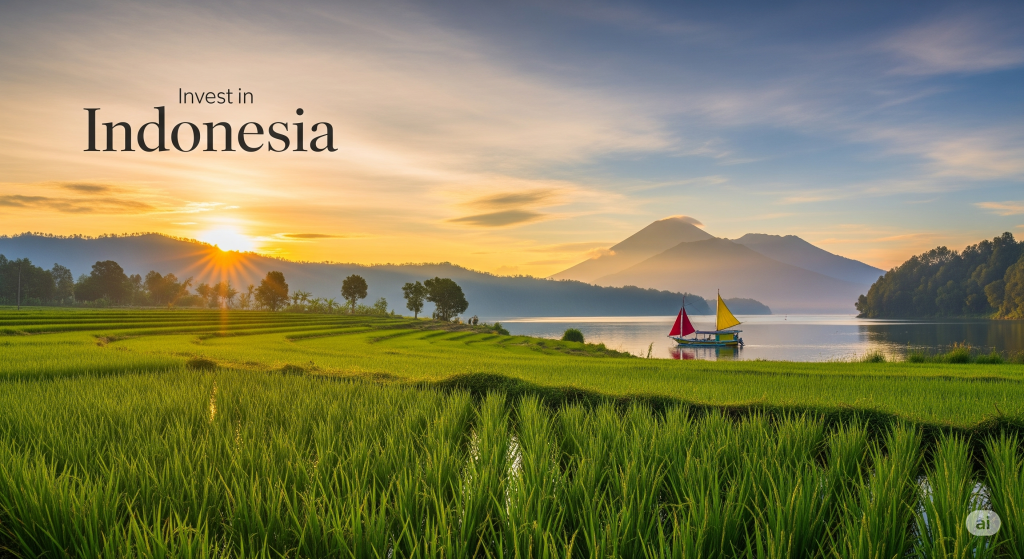
Indonesia, the world’s largest archipelago, is renowned for its rich natural resources and strategic position at the heart of Southeast Asia. With a population exceeding 276 million and a USD 1.2 trillion economy, Indonesia stands as one of the most dynamic emerging markets globally. The country’s vast and diverse natural commodities—from seaweed and coconut to palm oil, coal, and coffee—offer compelling opportunities for foreign investors seeking both growth and sustainability .
In recent years, the Indonesian government has implemented sweeping reforms to improve the investment climate, streamline regulations, and open more sectors to foreign participation. These efforts, combined with Indonesia’s abundant resources and growing middle class, have positioned the nation as a prime destination for foreign direct investment (FDI), particularly in the natural commodities sector .
This article explores the investment potential of Indonesia’s key natural commodities, highlights the opportunities and challenges for foreign investors, and introduces Ralali.com as a trusted partner for navigating the Indonesian market.
Indonesia’s Investment Climate: A Snapshot
Indonesia’s investment landscape has evolved rapidly, driven by government reforms such as the Omnibus Law on Job Creation, which aims to enhance competitiveness by lowering corporate taxes, reforming labor laws, and reducing bureaucratic and regulatory barriers . The Online Single Submission (OSS) system further streamlines business licensing, making it easier for foreign investors to establish and operate businesses in Indonesia .
Despite these positive developments, challenges remain. Investors must navigate regulatory uncertainties, economic nationalism, and corruption, which can complicate market entry and operations . However, the government’s commitment to liberalizing investment and improving the ease of doing business continues to attract significant FDI, particularly in sectors related to natural resources, infrastructure, and the digital economy .
Seaweed: Indonesia’s Blue-Green Gold
Market Overview
Indonesia is the world’s second-largest producer of seaweed, trailing only China. The country’s favorable climate and extensive coastline make it ideal for seaweed cultivation, particularly for varieties used in the extraction of carrageenan and agar—key ingredients in the food, cosmetics, and pharmaceutical industries .
Growth and Export Potential
The Indonesian seaweed market was valued at USD 116.39 million in 2024 and is projected to reach USD 236.78 million by 2033, growing at a robust CAGR of 8.21% . Indonesia exports a significant portion of its seaweed, primarily in dried form, to major markets such as China, South Korea, France, and Vietnam . The global demand for seaweed is driven by its nutritional benefits, applications in plant-based foods, and use in sustainable packaging and biofertilizers .
Investment Opportunities
- Processing and Value Addition: There is substantial potential for investment in processing facilities to produce higher-value products such as hydrocolloids, biofertilizers, and bioplastics.
- Sustainable Aquaculture: Mechanized tropical seaweed farms, like those established by Sea6 Energy on Lombok Island, demonstrate the scalability and sustainability of modern seaweed farming .
- Government Support: The Indonesian government actively supports the industry through subsidies, infrastructure development, and international trade alliances .
Challenges
Investors should be aware of challenges such as complex licensing processes, limited production technology, and distribution hurdles. Strategic investments in technology and infrastructure can help overcome these barriers and enhance competitiveness .
Coconut: The Tree of Life
Industry Overview
Indonesia is the world’s second-largest coconut producer, with an output of 2.83 million metric tons in 2023 and exports valued at USD 1.55 billion—accounting for 38.3% of the global market . The country’s tropical climate and fertile soils provide ideal conditions for coconut cultivation.
Market Segments and Growth
- Coconut Oil: The largest segment, used in food, cosmetics, and pharmaceuticals. The market for coconut oil is expected to grow steadily, driven by demand for natural and plant-based products .
- Coconut Water and Milk: These products are gaining popularity in health and wellness markets due to their hydrating and nutritional properties .
- Desiccated Coconut and Virgin Coconut Oil (VCO): Both are in high demand globally, with the VCO market projected to grow at a CAGR of 6.9% from 2024 to 2030 .
- Coconut Charcoal Briquettes and Fiber Products: These eco-friendly products offer opportunities for sustainable business practices and value addition .
Investment Opportunities
- Processing Facilities: Investments in modern processing plants for oil, water, milk, and desiccated coconut can capture higher value in the supply chain.
- Sustainable Products: Coconut sugar and charcoal briquettes are gaining traction in health-conscious and eco-friendly markets .
- Biofuels and Waste Utilization: The government is promoting coconut-based biofuels and the use of coconut husk and fiber for various products .
Challenges
The industry faces challenges such as high costs, aging trees, competition from palm oil, and supply chain inefficiencies. However, government initiatives to promote replanting, improve productivity, and support sustainability are helping to address these issues .
Palm Oil: A Global Powerhouse
Indonesia is the world’s leading exporter of palm oil, accounting for 54% of global exports. In 2023, the country produced 47 million tonnes of crude palm oil, contributing approximately 4.5% to the national GDP and supporting over 16.2 million people . Palm oil is a vital component of the global food, cosmetics, and biofuel industries.
Investment Considerations
- Sustainability: Environmental concerns related to deforestation have prompted the adoption of certification standards such as the Roundtable on Sustainable Palm Oil (RSPO) .
- Downstream Processing: The government’s “downstreaming” policy encourages investment in refining and value-added processing to capture more of the supply chain domestically .
Coal and Mining: Energy and Industrial Backbone
Indonesia is a major player in the global mining industry, with significant reserves of coal and nickel. In 2024, coal exports generated $50 billion in earnings, with key markets in China, India, and Japan . The country also holds the world’s largest nickel reserves, supporting the growing electric vehicle and battery industries .
Investment Opportunities
- Downstream Industries: The government is promoting investment in downstream processing for minerals, including smelting and battery manufacturing .
- Clean Energy Transition: There are emerging opportunities in clean energy technologies and sustainable mining practices.
Coffee: Specialty and Sustainability
Indonesia is among the world’s top producers of Arabica and Robusta coffee, with a market valued at US$ 16.83 billion . Specialty coffee from regions like Gayo (Aceh) and Toraja (Sulawesi) is gaining international recognition.
Investment Opportunities
- Specialty Coffee Production: Growing global demand for specialty and sustainably produced coffee offers opportunities for investment in high-quality processing and export.
- Agro-Tourism and Branding: Investments in branding, certification, and agro-tourism can further enhance the value of Indonesian coffee .
Ralali.com: Your Trusted Investment Partner in Indonesia
Navigating Indonesia’s vast and complex market can be challenging for foreign investors. Ralali.com, established in 2013, is a leading B2B marketplace that connects suppliers, distributors, and industrial buyers across Indonesia. With a network of over 150,000 resellers and 10,000 suppliers in more than 20 cities, Ralali.com provides a robust digital ecosystem for business transactions and investment facilitation .
Ralali.com offers a comprehensive suite of services, including secure payment solutions (RalaliPay, RalaliCredit), logistics and fulfillment, digital storefronts, and advanced fraud prevention. By empowering micro, small, and medium enterprises (MSMEs), Ralali.com enhances market access and supports business growth, making it an ideal partner for foreign investors seeking to enter or invest in Indonesia natural commodities sector .
Conclusion
Indonesia’s natural commodities—seaweed, coconut, palm oil, coal, and coffee—offer immense potential for foreign investors. The country’s ongoing reforms, government support, and growing global demand for sustainable and value-added products create a fertile environment for investment. While challenges such as regulatory complexity and supply chain inefficiencies persist, strategic partnerships and investments in technology, processing, and sustainability can unlock significant value.
Ralali.com stands ready to support foreign investors in navigating the Indonesian market, providing the digital infrastructure, market access, and local expertise needed to succeed. As Indonesia continues to rise as a global commodities powerhouse, now is the time for forward-thinking investors to seize the opportunities presented by this vibrant and resource-rich nation.