
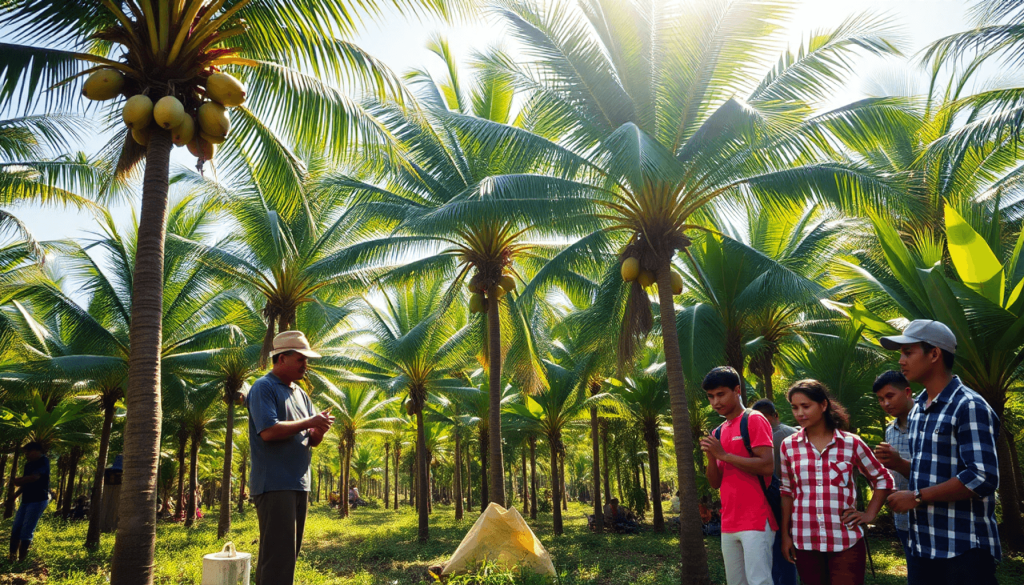
Coconut farming is very important in Indonesia and plays a significant role in agriculture. The coconut industry has many uses and is crucial for the economy, providing jobs for millions of farmers. With the growth of coconut agroindustry, there are now opportunities to create various products like oil, milk, sugar, and charcoal.
Economic Importance:
- Employment Opportunities: Coconut farming supports rural employment and contributes to local economies.
- Export Potential: The global demand for coconut derivatives has expanded markets for Indonesian products.
However, coconut farmers face several challenges:
- Sustainability Issues: Traditional practices often do not meet current sustainability standards.
- Generational Gaps: Differing approaches between older and younger farmers hinder collaborative progress.
- Productivity Constraints: Limited access to hybrid varieties and technological advancements affects productivity enhancement.
To ensure a sustainable future for Indonesian coconut agribusiness, it is crucial to address these challenges. By bringing together different generations through shared knowledge, we can develop innovative practices that satisfy both economic needs and sustainability objectives.
Research Motivation and Problem Statement
Understanding generational differences is crucial in shaping farming approaches within Indonesia’s coconut agribusiness. Older farmers often rely on traditional methods honed over decades, while younger farmers introduce innovative techniques influenced by modern agricultural trends. This divergence in practices can impact the overall sustainability of coconut farming.
The importance of adopting sustainable practices cannot be overstated. As environmental concerns rise and market demand shifts towards eco-friendly products, long-term viability hinges on the integration of sustainable cultivation methods.
A significant gap exists between older and younger farmers concerning their understanding of these sustainable practices and current market trends. Older generations may prioritize tried-and-true methods, whereas younger farmers are more attuned to emerging technologies and consumer preferences.
To bridge this gap, effective knowledge transfer mechanisms are essential. Collaborative strategies that encourage intergenerational dialogue can facilitate the co-creation of knowledge, enriching the farming community’s collective expertise. By fostering partnerships between generations, the coconut agribusiness sector can evolve to meet contemporary challenges while preserving its rich heritage.
Methodology
Gorontalo Province, located in Indonesia, is an important area for coconut farming. It has a wide range of farming methods and a lively community of farmers who contribute to the local economy through various coconut products. The specific geographical and climate conditions in Gorontalo make it ideal for growing coconuts, which is why it is a crucial place to study sustainable farming practices.
The research uses a grounded theory approach, which is a qualitative research method used to understand farmers’ views on sustainability and innovation. This method allows us to create theories based on the information gathered from participants instead of using pre-existing ideas. By talking directly with farmers, we can learn about their experiences, difficulties, and goals in coconut farming.
Key elements of this methodology include:
- In-depth interviews with farmers to gather nuanced insights
- Focus on understanding both traditional and modern farming methods
- Exploration of intergenerational knowledge transfer within the community
This detailed methodology helps us understand how differences between generations impact sustainable practices in Gorontalo’s coconut farming industry.
Data Collection Methods
The study employed qualitative interviews to gather in-depth insights from a diverse group of farmers. A total of 30 farmers participated, including:
- 17 older farmers
- 13 younger farmers
These interviews focused on various aspects of farming, such as:
- Cultivation practices: Understanding traditional versus contemporary techniques.
- Processing methods: Exploring how different generations approach coconut processing.
- Marketing strategies: Analyzing the channels used for selling coconut products.
In addition to interviews, incorporating field observations played a crucial role in the data collection process. This hands-on approach enabled researchers to:
- Gain a holistic understanding of the daily realities faced by farmers.
- Observe challenges and successes in real-time.
- Contextualize farmer perspectives within their actual working environments.
These combined methodologies provided a comprehensive view of the intergenerational dynamics at play in Indonesia’s coconut agribusiness sector. Insights from both older and younger farmers highlighted distinct approaches toward sustainability, innovation, and market engagement. By bridging these perspectives, the research aimed to uncover opportunities for collaboration and knowledge co-creation that could enhance the sector’s resilience.
Results and Discussion
The findings from the interviews reveal significant contrasts between older and younger coconut farmers in Indonesia, particularly in their approaches to cultivation, processing, and marketing. These differences not only highlight generational gaps but also illustrate the potential pathways toward more sustainable agribusiness practices.
Tree Rejuvenation vs. Intercropping
Older farmers predominantly emphasize tree rejuvenation as a core strategy for maintaining long-term sustainability in coconut farming. This method involves:
- Pruning: Regularly cutting back trees to promote healthier growth and fruit production.
- Soil Management: Implementing techniques that enrich soil quality, essential for sustaining coconut yields over time.
This focus on rejuvenation reflects a deep understanding of traditional practices aimed at preserving the land’s productivity for future generations.
In contrast, younger farmers are increasingly adopting intercropping methods. They integrate various crops alongside coconut palms for several reasons:
- Growing cash crops such as fruits or vegetables provides immediate financial benefits.
- Intercropping promotes ecological diversity, which can enhance resilience against pests and diseases.
The shift toward intercropping signifies a response to immediate economic pressures while still recognizing the importance of sustainable practices.
Traditional Copra vs. Value-Added Products
The production methods also vary significantly between generations. Older farmers typically rely on traditional copra and coconut oil production methods:
- This involves drying coconut flesh to extract oil, a process that has been practiced for decades.
- These farmers often depend on established market chains that have historically provided stability but may lack adaptability.
Conversely, younger farmers are innovating by exploring value-added products like Virgin Coconut Oil (VCO). This trend includes:
- Young producers experiment with products such as activated charcoal from shells and ready-to-eat coconut-based snacks.
- The rise of health-conscious consumers drives demand for VCO and other nutritious coconut derivatives.
Younger farmers recognize that diversifying product offerings not only enhances profitability but also aligns with contemporary market demands.
Established Market Chains vs. Modern Marketing Techniques
Another noteworthy contrast lies in marketing strategies employed by these two groups of farmers. Older farmers tend to rely heavily on established market chains:
- They sell primarily to local buyers who purchase in bulk, often resulting in fixed pricing structures.
- This approach restricts their ability to explore broader markets or adjust prices based on demand fluctuations.
Young farmers are leveraging modern marketing techniques to expand their reach:
- Utilizing platforms like Instagram and Facebook allows them to connect directly with consumers and build brand awareness.
- Online sales channels enable them to tap into national and even international markets, enhancing profitability.
By embracing technology, younger farmers can navigate supply chain challenges more effectively than their older counterparts.
Bridging Generational Practices
These divergent practices underscore the need for knowledge co-creation between older and younger farmers. By combining the wisdom of traditional practices with innovative approaches, both groups stand to benefit.
For instance, older farmers can share insights on soil management and tree care while younger farmers can introduce new income streams through innovative product development.
Initiatives promoting collaborative workshops or training sessions could facilitate this exchange of knowledge. Such collaborations would not only foster innovation but also strengthen community ties within the coconut agribusiness sector.
The findings from this study reveal the complexities surrounding generational differences in Indonesian coconut farming. Understanding these perspectives is crucial for developing cohesive strategies that support sustainability while addressing immediate economic needs.
Bridging Generations through Knowledge Co-Creation
Fostering collaboration between older and younger farmers is crucial for driving agricultural innovation in Indonesia’s coconut sector. By combining traditional knowledge with modern practices, farmers can enhance productivity, sustainability, and profitability.
Key Collaborative Processes
1. Knowledge Sharing
Workshops and training sessions can facilitate the exchange of experiences between generations. Older farmers can impart valuable insights on long-term cultivation techniques, while younger farmers introduce innovative methods and technologies.
2. Joint Ventures
Intergenerational partnerships can lead to new business models. For instance, older farmers might collaborate with younger entrepreneurs to create value-added products like coconut water or activated charcoal from shells.
Successful Initiatives
Examples of successful knowledge co-creation initiatives illustrate the potential of these collaborations:
- Community-Based Projects: In Gorontalo, intergenerational farming cooperatives have emerged where both age groups work together to implement sustainable practices while sharing resources and market access.
- Agri-Tech Platforms: Digital initiatives supported by organizations like Ralali.com enable farmers to connect, share best practices, and explore innovative solutions for production challenges.
These collaborative efforts not only bridge generational gaps but also empower the coconut agribusiness sector to adapt to changing market demands and environmental conditions.
Conclusion
- Stakeholders must facilitate knowledge exchange platforms that promote dialogue between different generations of coconut farmers.
- Embracing the principles of sustainable agribusiness will enhance future prospects for the coconut sector.
Leveraging diverse perspectives creates opportunities for innovation, resilience, and sustainability within Indonesia’s coconut agribusiness. By bridging the generational gap through knowledge co-creation, farmers can adapt to market trends while preserving traditional practices, ensuring a robust future for this vital industry.
FAQs (Frequently Asked Questions)
Coconut farming plays a crucial role in Indonesia’s economy by contributing to rural livelihoods, providing employment, and generating income through both traditional products like copra and innovative value-added products such as virgin coconut oil (VCO). The industry supports local communities and contributes significantly to the agricultural sector.
Coconut farmers in Indonesia encounter several challenges, including generational differences in farming practices, limited access to sustainable cultivation methods, market fluctuations, and reliance on traditional farming techniques that may not meet modern demands. Addressing these challenges is vital for enhancing productivity and sustainability.
Generational differences significantly influence farming approaches among coconut farmers. Older farmers tend to focus on traditional practices like tree rejuvenation and established market chains, while younger farmers are more inclined towards innovative methods, such as intercrops and modern marketing strategies. This divergence can create gaps in knowledge transfer regarding sustainable practices.
Stakeholders can promote knowledge exchange by establishing platforms for dialogue that encourage collaboration between older and younger farmers. This includes organizing workshops, training sessions, and community events focused on sustainable agribusiness practices, thereby leveraging diverse perspectives to build a more resilient future for Indonesia’s coconut agribusiness sector.
Pingback:Optimizing Coconut Value Chain: A Comprehensive Analysis of Marketing Patterns and SCP Model in Indonesia's Central Java Province - Indonesia Supplier
Pingback:Unlocking the Potential of Bido Coconut: A Comprehensive Study on Flowering Patterns and Genetic Diversity in Indonesia's Unique Coconut Variety - Indonesia Supplier