
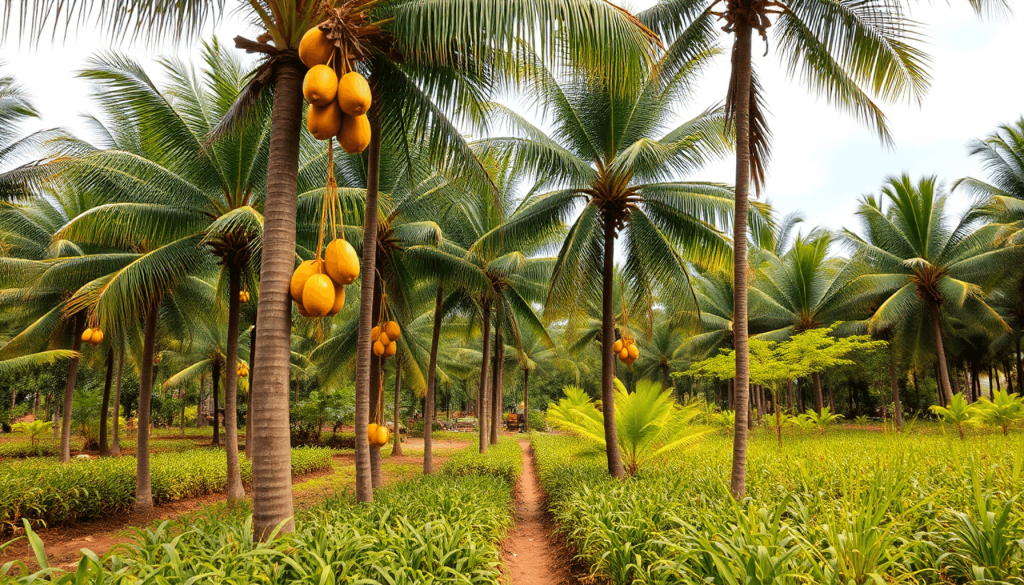
The coconut agroindustry is an important part of global agriculture, making a significant contribution to the economies of many tropical countries. It has gained a lot of attention due to its wide range of uses, including food products like coconut oil and milk, as well as bioenergy and activated charcoal.
However, the industry faces several challenges such as:
- Poor supply chain infrastructure
- Concerns about environmental sustainability
- Fluctuations in the market
On the other hand, there are also opportunities available through:
- Developing products with higher value
- Implementing sustainable practices
- Expanding export markets
To improve efficiency and sustainability in the coconut agroindustry, it is crucial to explore innovations and trends in its supply chain. This emphasis on sustainable coconut supply chain practices is vital for ensuring the industry’s growth while minimizing its impact on the environment. The ongoing changes aim to empower all parties involved, especially smallholder farmers, by utilizing technology and innovative approaches.
Current Trends in the Coconut Agroindustry
The coconut agroindustry has undergone significant changes due to the increasing demand for coconut-based products worldwide. Consumers are now leaning towards healthier and sustainable options, which has prompted industry players to modify their practices accordingly.
Sustainability Practices
1. Adoption of Eco-Friendly Farming Techniques
There is a growing emphasis on sustainability, leading to the adoption of eco-friendly farming practices. These methods include:
- Agroforestry: Integrating coconut palms with other crops and trees enhances biodiversity and improves soil health. This approach not only increases yields but also fosters a resilient ecosystem.
- Organic Farming: Avoiding synthetic fertilizers and pesticides aligns with consumer demand for organic products, ensuring healthier produce and contributing to environmental conservation.
2. Circular Economy Approaches
The circular economy is gaining traction within the coconut agroindustry, aiming to minimize waste and optimize resource usage. Key initiatives include:
- Biochar: This carbon-rich substance derived from coconut husks and shells improves soil fertility while sequestering carbon, thus addressing climate change.
- Biodegradable Packaging: As consumers become increasingly aware of plastic pollution, biodegradable packaging sourced from coconut materials offers an innovative solution. This practice not only reduces waste but also adds value to by-products previously considered as waste.
These sustainability practices reflect a broader trend within the industry that prioritizes environmental stewardship alongside profitability. Companies like Ralali.com are at the forefront, promoting sustainable practices through funding and training initiatives aimed at smallholder farmers.
Climate Resilience
Climate change poses critical challenges to agriculture, particularly in tropical regions where coconuts thrive. The introduction of climate-resilient coconut farming techniques is essential for adapting to environmental disruptions such as prolonged droughts or erratic rainfall patterns.
- Development of Drought-Resistant Varieties: Research on breeding drought-resistant coconut varieties is underway, allowing farmers to maintain productivity amidst changing climatic conditions.
- Mitigation Strategies: Implementing strategies such as improved irrigation systems and soil management techniques enables farmers to cope with environmental uncertainties effectively.
The integration of these trends into the coconut supply chain enhances both sustainability and resilience. By focusing on eco-friendly practices and climate adaptation strategies, stakeholders can ensure long-term viability in a competitive market while meeting growing consumer expectations for responsible sourcing and environmental impact reduction.
Climate Resilience
The coconut agroindustry is facing growing challenges due to environmental changes, making it crucial to prioritize climate resilience strategies. One significant innovation in this regard is the development of drought-resistant coconut varieties. These resilient cultivars have the ability to thrive in conditions characterized by unpredictable rainfall and extended dry periods, which aligns perfectly with the increasing demand for coconut products worldwide.
Shielding Coconut Crops from Disruptions
In order to protect coconut crops from disturbances such as El Niño, it is essential for farmers to adopt mitigation strategies. Various approaches are being explored by farmers:
- Diversified cropping systems: This involves integrating other crops alongside coconut trees to improve soil health and reduce pest pressures.
- Water conservation techniques: Farmers are implementing rainwater harvesting systems and drip irrigation methods to optimize water usage.
- Agroforestry practices: By creating shaded environments that shield coconut trees from extreme weather events, farmers can also promote biodiversity.
These initiatives signify a transition towards climate-resilient coconut farming, ensuring consistent production even in the face of changing environmental conditions.
Opportunities and Challenges in Global Markets
As consumer preferences increasingly shift towards plant-based and natural products, there is a corresponding growth in global markets for coconut oil, water, sugar, and desiccated coconut. However, this growth also brings forth both opportunities and challenges for the industry.
It is crucial to emphasize eco-friendly farming methods and circular economy principles in order to cultivate a sustainable future for the coconut agroindustry.
Innovations in the Supply Chain
Technological Advancements
The coconut agroindustry is embracing technological advancements that enhance efficiency and sustainability throughout the supply chain. Two pivotal innovations stand out: precision agriculture and blockchain technology.
1. Precision Agriculture
- Utilizing drones and satellite imagery enables farmers to monitor crop health with remarkable accuracy. These technologies provide real-time data on soil conditions, moisture levels, and pest infestations.
- By analyzing this data, farmers can make informed decisions about irrigation, fertilization, and pest control. This targeted approach not only maximizes yield but also minimizes resource waste, contributing to more sustainable farming practices.
2. Blockchain Technology
- Implementing blockchain enhances traceability and transparency in sourcing coconuts. Each step in the supply chain can be documented and verified, from farm to consumer.
- This level of transparency builds trust among consumers who are increasingly demanding proof of ethical sourcing and sustainability. For instance, customers can track the origin of their coconut products, ensuring they support environmentally responsible practices.
The integration of these technologies fosters a more resilient coconut supply chain. As you consider how these innovations impact the industry, it’s essential to recognize their role in promoting ethical business practices.
Processing Innovations
In tandem with technological advancements, processing innovations are transforming how coconut products are created and preserved.
- Advanced methods for coconut oil extraction have emerged, including cold pressing and continuous drying techniques. These methods not only improve oil quality but also maintain nutritional value.
- Preservation technologies are vital for extending the shelf life of coconut milk and sugar. Techniques such as ultra-high temperature (UHT) processing ensure that these products remain safe for consumption without compromising flavor or key nutrients.
Digital Solutions
Digital solutions play a crucial role in empowering smallholder farmers within the coconut sector.
- Digital advisory tools provide essential information on climate-smart practices tailored to local contexts. These tools help farmers adapt to changing environmental conditions while optimizing productivity.
- Mobile applications facilitate market access by connecting farmers directly to buyers. This direct link enhances profitability for farmers by reducing intermediaries, allowing them to receive fair prices for their produce.
These innovations create a dynamic ecosystem within the coconut agroindustry, driving improvements that benefit all stakeholders involved. The ongoing evolution of technology will continue to shape this sector’s future as it seeks sustainable growth and development.
Processing Innovations
Innovations in coconut processing are crucial for enhancing product quality and extending shelf life. Key advancements include:
Coconut Oil Extraction Methods
- Cold Pressing: This method preserves the oil’s natural flavor and nutrients by extracting oil without heat. It results in higher-quality oil, appealing to health-conscious consumers.
- Continuous Drying: A more efficient technique that reduces moisture content quickly, ensuring better preservation of coconut products. This process enhances the overall yield and quality of the extracted oil.
Preservation Technologies
Innovative preservation methods are essential for maintaining the freshness of coconut-based products like milk and sugar.
- High-Pressure Processing (HPP): This technology uses high pressure to eliminate pathogens while retaining flavor and nutrients, extending shelf life significantly.
- Natural Preservatives: Employing ingredients such as ascorbic acid or rosemary extract has gained traction as they offer a clean-label alternative to traditional preservatives.
The integration of these technological advancements in coconut processing not only improves product viability but also aligns with consumer demand for healthier, sustainable options. The focus on high-quality extraction and preservation techniques reflects a commitment to innovation within the coconut agroindustry supply chain.
Digital Solutions
Technological advancements are transforming the coconut agroindustry, particularly through digital solutions that enhance efficiency and sustainability.
1. Digital Advisory Tools
These tools are essential for smallholder farmers, guiding them to adopt climate-smart practices. They provide valuable insights into optimal farming techniques, pest management, and resource allocation. This kind of support is vital in improving yield while minimizing environmental impact.
2. Mobile Applications
The rise of mobile technology facilitates market access and knowledge sharing among farmers. Applications designed specifically for the coconut industry enable users to connect with buyers, access real-time market prices, and share best practices. Farmers can exchange information about crop monitoring and precision agriculture techniques, enhancing overall productivity.
The integration of these innovative digital solutions empowers farmers, enabling them to make informed decisions that align with sustainable practices. By leveraging technology in their operations, stakeholders in the coconut supply chain can improve traceability and transparency while fostering a more resilient agricultural ecosystem. The focus on digital advancements will play a pivotal role in shaping the future of the coconut agroindustry.
Future Directions for the Coconut Agroindustry Supply Chain
Anticipating Future Developments Through Technological Surveillance and Foresight Analysis
The coconut agroindustry is set to undergo a transformation with the help of technological surveillance and foresight analysis. These strategies empower stakeholders to stay ahead of market trends, environmental changes, and consumer demands. Here are the key components:
1. Data Analytics
Leveraging big data can provide insights into market fluctuations, helping producers adjust their strategies in real-time. Predictive analytics can forecast supply chain disruptions, allowing proactive measures.
2. Remote Sensing Technologies
Utilizing satellite imagery and drone technology offers a comprehensive view of coconut farms. This aids in monitoring crop health, soil conditions, and water availability, enhancing decision-making processes.
3. Artificial Intelligence (AI)
Integrating AI tools can streamline operations from planting to harvesting. Machine learning algorithms can optimize resource allocation and improve yield predictions.
4. Collaboration Platforms
Developing online networks encourages knowledge sharing among farmers, researchers, and businesses. These platforms facilitate discussions on best practices and emerging trends.
5. Sustainability Metrics
Monitoring sustainability metrics helps ensure that eco-friendly practices are maintained throughout the supply chain. Tools that assess carbon footprints or water usage can guide improvements.
The combination of these technological advancements positions the coconut agroindustry to adapt swiftly to future challenges. By embracing innovation, stakeholders can enhance resilience while promoting sustainable growth within the supply chain. As these trends evolve, they will significantly influence operational efficiency and product quality across the sector.
Integration of Expert Opinions to Inform Strategic Planning Within The Industry
Incorporating expert insights is crucial for shaping the future of the coconut agroindustry. Key strategies include:
- Workshops and Conferences: Facilitate knowledge sharing among industry leaders, researchers, and farmers.
- Advisory Panels: Establish panels comprising agronomists, market analysts, and sustainability experts to provide guidance on emerging trends.
- Research Collaborations: Partner with academic institutions for studies focused on innovations in coconut cultivation and processing.
These approaches enable stakeholders to stay informed about future trends, ensuring that technological surveillance effectively informs strategic planning within the Innovations and Trends in the Coconut Agroindustry Supply Chain. Emphasis on expert opinions fosters a resilient and adaptive industry.
FAQs (Frequently Asked Questions)
The coconut agroindustry holds global importance due to its rising demand and versatility, providing products like coconut oil, water, sugar, and desiccated coconut. It plays a crucial role in supporting economies, particularly in tropical regions, while catering to increasing consumer preferences for plant-based and natural products.
Current trends in the coconut supply chain include the adoption of eco-friendly farming techniques, such as agroforestry and organic farming, as well as circular economy practices aimed at waste minimization. There is also a growing emphasis on climate-resilient coconut farming to adapt to environmental changes.
Technological advancements are transforming the coconut agroindustry through precision agriculture tools like drones and satellite imagery for crop monitoring. Additionally, blockchain technology enhances traceability and transparency in sourcing, ensuring a more efficient supply chain.
Innovations in coconut processing include advanced methods for extracting coconut oil such as cold pressing and continuous drying. Furthermore, new preservation technologies are being developed to extend the shelf life of products like coconut milk and sugar.
Pingback:Coconut Derivatives Market Poised to Exceed $10 Billion by 2032 as Health and Sustainability Trends Accelerate Demand - Indonesia Supplier