
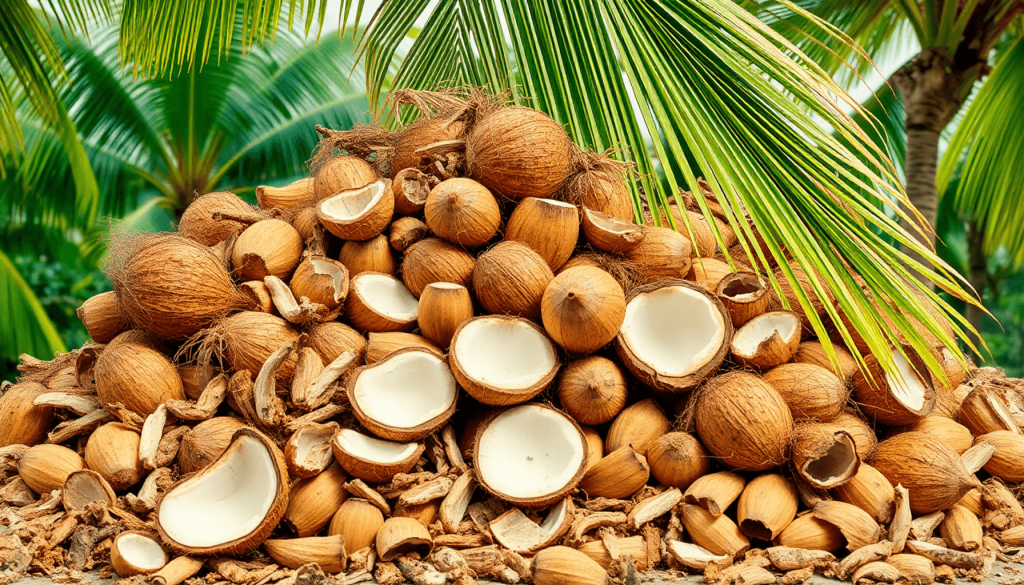
The global energy crisis highlights the urgent need for sustainable alternatives to traditional fossil fuels. As the demand for energy continues to rise, reliance on finite resources has become increasingly unsustainable. The transition to renewable energy sources is not just a choice; it is a necessity for achieving environmental goals and ensuring energy security.
One promising solution lies in the development of bioenergy from coconut waste.
Coconut waste, includes:
- Shells
- Husks
- Fronds
- Fiber
- Pulp
This abundance of byproducts presents an opportunity to harness renewable energy. Utilizing coconut waste as a renewable energy source offers several advantages:
- It is low-cost and readily available.
- It contributes to reducing greenhouse gas emissions.
- It promotes sustainable waste management practices.
By focusing on coconut waste, you can play a part in mitigating the global energy crisis while supporting sustainable development initiatives. The potential of kelapa in bioenergy production could be a game-changer in the quest for cleaner, more efficient energy solutions.
Read More: Research And Innovation In Utilizing Coconuts As A Renewable Energy Source.
Coconut Waste: A Promising Bioenergy Feedstock
Coconut waste, which includes coconut husks, shells, fronds, fiber, and pulp, is generated in vast quantities globally. The coconut palm is often referred to as the “Tree of Life,” not only for its fruit but also for the significant biomass it produces. This biomass can be harnessed effectively for bioenergy production.
Advantages of Coconut Waste as a Bioenergy Feedstock
- Renewable Resource: Coconut palms thrive in tropical climates, providing a continuous supply of biomass. As long as palms are cultivated, waste materials will be available.
- Low-Cost Feedstock: Utilizing coconut waste minimizes costs associated with raw materials. Farmers and processors often have excess waste they seek to dispose of efficiently.
- Environmentally Friendly: The use of coconut waste contributes to reducing greenhouse gas emissions compared to fossil fuels. It promotes a circular economy where waste is transformed into energy rather than contributing to landfill issues.
The potential of bioenergy sourced from coconut waste is significant. By tapping into this abundant resource, you can play a crucial role in sustainable energy solutions while supporting local economies and ecosystems.
Technologies for Converting Coconut Waste into Bioenergy
1. Pyrolysis: Unlocking the Potential of Coconut Shells and Husks
Pyrolysis is a game-changing technology that can unlock the potential of coconut shells and husks, turning them into valuable bioenergy products. This process involves heating organic material in the absence of oxygen, causing it to break down. The main outputs of pyrolysis are:
- Biochar: A solid residue with significant carbon content, biochar improves soil health and sequesters carbon.
- Bio-oil: A liquid product rich in hydrocarbons, bio-oil can be used as a renewable fuel or further refined into various chemicals.
- Syngas: A gaseous mixture primarily consisting of hydrogen and carbon monoxide, syngas can be utilized for electricity generation or as a feedstock for synthesizing other fuels.
The versatility of these products highlights the potential of coconut waste in the bioenergy sector.
In addition to energy production, there is a growing industrial demand for activated carbon derived from coconut waste. This material is created during pyrolysis through the activation of charcoal. Activated carbon possesses a highly porous structure that enhances its adsorption capabilities, making it valuable for:
- Water purification: Effective in removing impurities and contaminants from drinking water.
- Air purification: Used in filters to capture volatile organic compounds (VOCs) and other pollutants from indoor air.
The applications of activated carbon extend beyond environmental benefits; they contribute to public health by providing cleaner air and water.
The process of pyrolysis not only addresses energy needs but also mitigates waste management challenges associated with coconut by-products. As coconut production increases globally, so does the volume of waste generated. Utilizing this waste through pyrolysis creates a sustainable loop that transforms what would otherwise be discarded into useful resources.
Incorporating pyrolysis into existing agricultural practices enables farmers and businesses to diversify income streams while contributing to sustainability goals. By turning coconut waste into biochar, bio-oil, and syngas, stakeholders can harness an abundance of renewable energy sources while promoting eco-friendly practices within their communities.
Coconut waste products are gaining attention for their potential in addressing both energy shortages and environmental concerns. The continued exploration of technologies like pyrolysis will play a crucial role in developing viable solutions for sustainable energy production from underutilized resources.
2. Fermentation: Using Coconut Husk Residues to Produce Bioethanol
Using coconut husk residues to produce second-generation bioethanol is a significant advancement in bioenergy solutions. This fermentation process allows for the conversion of lignocellulosic materials, such as coconut husks, into bioethanol, offering several advantages over traditional biofuels.
Key benefits of second-generation bioethanol include:
- Sustainability: Unlike first-generation biofuels derived from food crops, second-generation bioethanol does not compete with food resources, promoting a more sustainable approach to energy production.
- Feedstock Utilization Efficiency: Coconut husks, often considered waste, are abundant and provide an underutilized resource for energy generation. Utilizing these residues reduces waste and adds value to the agricultural sector.
The fermentation process involves breaking down complex carbohydrates in coconut husks into simpler sugars, which are then fermented by yeast to produce ethanol. This method not only addresses the growing demand for sustainable energy sources but also contributes to reducing greenhouse gas emissions compared to fossil fuels.
Incorporating technologies like pyrolysis alongside fermentation enhances the potential for developing a comprehensive bioenergy strategy from coconut waste products. Each method contributes uniquely to converting organic materials into valuable renewable energy while promoting environmental sustainability.
3. Briquetting: Turning Coconut Shells into Solid Fuel Alternatives for Homes and Industries
The process of converting coconut shells into biomass briquettes offers an innovative way to create alternative fuel sources. Here’s how it works:
- Collection and Preparation: Gathering coconut shells, which are often considered waste, and grinding them into a fine powder.
- Compaction: Using high pressure to compact the ground shells into dense briquettes without the need for additional binders.
- Drying: Ensuring that the briquettes have low moisture content to enhance their burning efficiency.
Biomass briquettes offer several advantages over traditional fossil fuels:
- Emissions Reduction: Burning biomass briquettes produces significantly lower greenhouse gas emissions, leading to cleaner air quality.
- Resource Diversification: Using coconut waste products helps reduce dependency on fossil fuels and promotes sustainable energy practices.
- Energy Efficiency: Briquettes generally have a higher energy content than raw coconut shells, making them an effective fuel source for homes and industries.
Developing bioenergy from coconut waste not only solves waste management problems but also opens doors to more sustainable energy solutions. Adopting methods like briquetting supports global efforts to find eco-friendly alternatives in energy use.
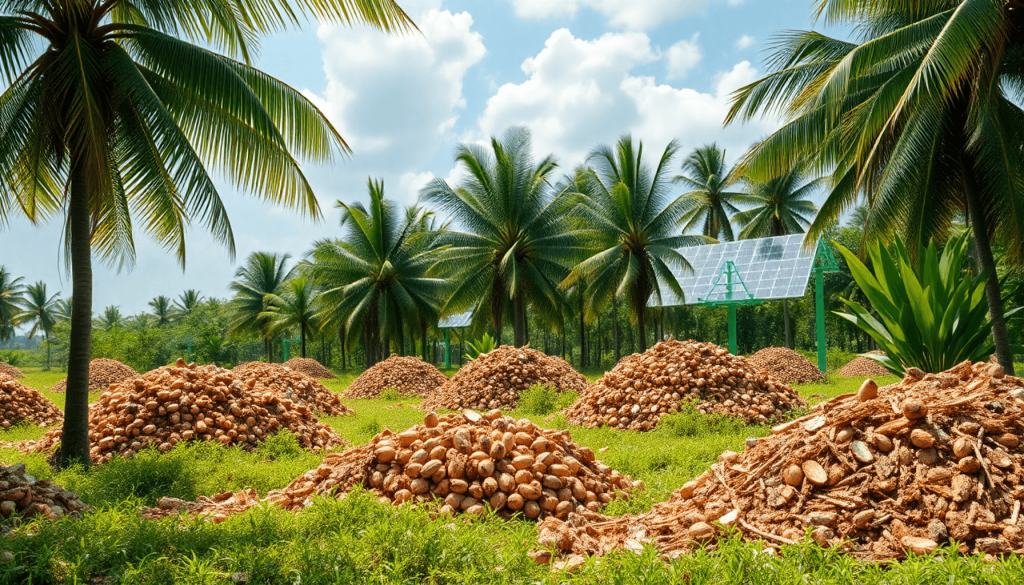
Economic Viability and Market Acceptance Challenges in Developing Bioenergy from Coconut Waste
Examining the economic viability of coconut biomass utilization for bioenergy production reveals both opportunities and obstacles. The potential for cost-effective energy generation exists, driven by the abundant availability of coconut waste. Factors influencing this viability include:
1. Production Costs
Initial investment in conversion technologies like pyrolysis or gasification can be high. Long-term savings on energy costs may justify these expenses.
2. Market Demand
Growing interest in renewable energy sources can enhance market acceptance. However, fluctuating fossil fuel prices may affect competitiveness.
Technological barriers pose significant challenges to the widespread adoption of these methods:
1. Infrastructure Limitations
Many regions lack the necessary infrastructure to support large-scale bioenergy projects. This can hinder efficient collection and processing of coconut waste.
2. Technical Expertise
A shortage of skilled personnel familiar with advanced bioenergy technologies can slow progress in the sector. Training initiatives are crucial for addressing this gap.
Addressing these economic and technological challenges is vital for unlocking the full potential of bioenergy derived from coconut waste, paving the way for a more sustainable energy future.
Ralali’s Role in Advancing the Coconut Bioenergy Sector
Ralali is an important B2B platform in Indonesia that supports innovation and growth in the coconut industry. This online marketplace plays a vital role in bringing together different parties involved, allowing them to work together and improve the entire process of producing and selling products made from coconuts.
Key initiatives by Ralali include:
- Empowering MSMEs: Through targeted funding programs, Ralali supports micro, small, and medium enterprises (MSMEs) in the coconut sector. This funding facilitates technological upgrades and promotes sustainable practices.
- Training Workshops: Ralali organizes workshops designed to educate MSMEs on best practices in bioenergy production from coconut waste. These sessions cover various topics, including efficient waste utilization and conversion technologies.
- Market Access Expansion: By backing the government’s coconut downstream program, Ralali enhances market access for coconut products. This initiative aims to broaden export markets and increase competitiveness.
Ralali’s commitment to creating a sustainable and inclusive business ecosystem empowers local entrepreneurs while promoting advancements in bioenergy solutions derived from coconut waste. Through collaborative efforts, the platform not only supports the growth of the coconut industry but also contributes significantly to environmental sustainability goals.
Conclusion: Towards a Sustainable Future with Bioenergy from Coconut Waste
The development of bioenergy from coconut waste presents significant opportunities for achieving sustainability goals globally. Harnessing coconut by-products not only contributes to renewable energy production but also addresses environmental challenges posed by fossil fuels. Key benefits include:
- Reduction in Waste: Utilizing coconut shells, husks, and other residues minimizes landfill use.
- Renewable Energy Source: Coconut waste provides a continuous supply of biomass for energy generation.
- Economic Growth: Engaging micro, small, and medium enterprises (MSMEs) stimulates local economies.
Innovative technologies and practices in the bioenergy sector are essential for maximizing the potential of coconut waste. By promoting these solutions, we pave the way for a sustainable future that aligns with both economic and environmental objectives. Embracing this path ensures that we leverage coconut waste effectively while fostering a green economy that benefits all stakeholders involved.
FAQs (Frequently Asked Questions)
The development of bioenergy from coconut waste is crucial in addressing the global energy crisis by providing sustainable alternatives. Coconut waste, which includes husks, shells, and fronds, serves as a renewable energy sources that can help reduce reliance on fossil fuels.
Coconut waste includes various materials such as coconut husks, shells, fronds, fiber, and pulp. These abundant resources can be converted into bioenergy through different technologies, making them valuable feedstocks for sustainable energy solutions.
Pyrolysis is a thermal decomposition process that converts coconut shells and husks into valuable products like biochar, bio-oil, and syngas. This method not only generates renewable energy but also produces activated carbon for water and air purification applications.
Biomass briquettes made from coconut shells serve as solid fuel alternatives that can significantly reduce emissions compared to traditional fossil fuels. They provide a sustainable energy source for households and industries while promoting resource diversification.
Pingback:Research And Innovation In Utilizing Coconuts As A Renewable Energy Source. - Indonesia Supplier