
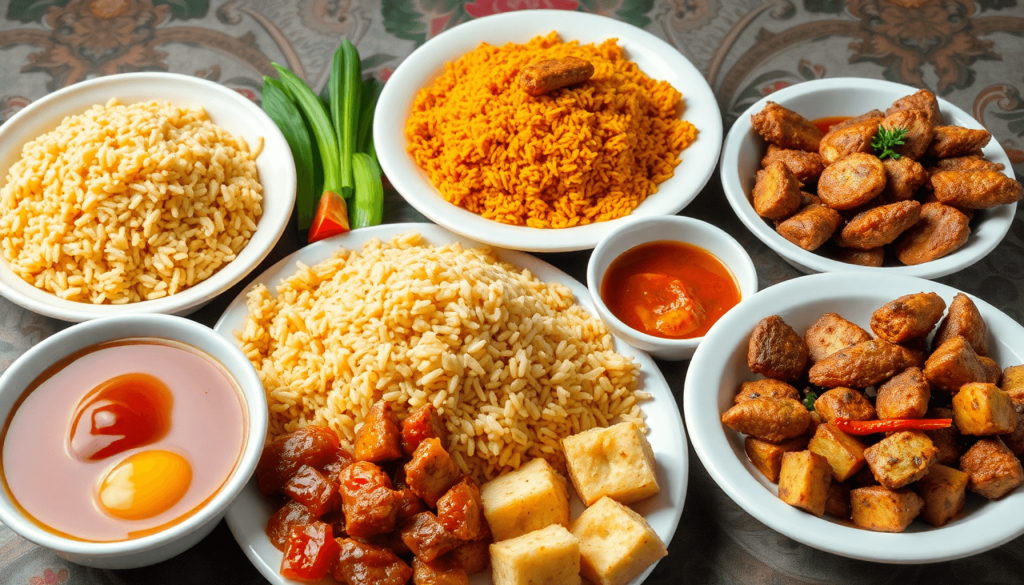
Indonesian cuisine is a colorful blend of flavors, shaped by its various cultures and rich history. Every region has its own special dishes that showcase local ingredients and customs. Here are some key points:
- Diversity: With over 17,000 islands, there are many different culinary styles.
- Cultural Significance: Foods like Pempek from Palembang represent regional pride and heritage.
The growth of brands like Mina Soku and platforms such as Ralali is helping to promote genuine Indonesian foods. In this article, we will explore the 15 Most Important Indonesian Foods, each with its own unique qualities and appeal.
1. Nasi Goreng
Nasi Goreng is Indonesia’s iconic fried rice dish, beloved for its rich flavors and versatility. This dish typically includes:
- Common Ingredients: cooked rice, shallots, garlic, sweet soy sauce (kecap manis), chili peppers, and vegetables like carrots and peas.
Regional variations showcase personal adaptations, with Nasi Padang featuring a unique blend of spices and additions such as fried chicken or rendang. Each region offers its own twist, ensuring that Nasi Goreng remains a staple that reflects Indonesia’s diverse culinary landscape.
2. Nasi Uduk
Nasi Uduk is a beloved Indonesian dish made from steamed rice cooked in coconut milk, giving it a rich and creamy flavor. This fragrant rice is often served with various accompaniments, enhancing its appeal:
- Fried tofu and tempeh
- Boiled eggs
- Fried shallots
- Sambal (spicy chili sauce)
- Cucumber slices
In Indonesian culture, Nasi Uduk holds significant importance during festivities, such as weddings and religious celebrations. It symbolizes abundance and is often enjoyed in communal settings, reinforcing connections among family and friends.
3. Rendang
Rendang is a famous beef curry from West Sumatra, Indonesia. It is known for its delicious flavors and is an important part of Minangkabau culture.
Traditional Cooking Process
Rendang is made using a traditional cooking method that involves:
- Slow-cooking the beef for several hours to allow it to absorb the spices.
- Using key ingredients such as coconut milk, lemongrass, galangal, turmeric, and chili.
Spices Used
The secret to Rendang’s amazing taste lies in its unique combination of spices. These spices work together to create a rich and complex flavor that is sure to please anyone who tries it.
Rendang has gained international recognition, winning awards like “World’s Most Delicious Food” in various surveys. Its popularity continues to grow, making it a staple in both Indonesian households and global cuisine.
4. Sate (Satay)
Sate, or satay, consists of grilled meat skewers that are a beloved staple in Indonesian cuisine. The types of meats used in satay vary significantly, including:
- Chicken
- Beef
- Lamb
- Fish
Each region of Indonesia has its own special marinades and sauces that make the flavors of the skewered meat even better. For example, Balinese satay often comes with a delicious peanut sauce, while Javanese versions might have sweet soy sauce.
Common serving styles include:
- Grilled on open flames for a smoky flavor
- Accompanied by rice cakes or lontong
- Served with fresh cucumber and onion slices
These variations make each bite of sate a delightful experience reflecting local culinary traditions.
5. Ayam Goreng
Indonesian-style Ayam Goreng, or fried chicken, is known for its crispy outside and juicy inside. The chicken is usually marinated in a mix of spices like garlic, shallots, turmeric, and coriander before being fried to create a delicious flavor.
Popular Variations
- Kremes: This version has a crunchy layer made from a combination of flour and the chicken’s marinade.
- Penyet: In this style, the fried chicken is smashed with a pestle, making it more tender and allowing the sambal (spicy sauce) to blend in.
Typical Side Dishes
- Steamed rice
- Cucumber slices
- Fried tempeh or tofu
Ayam Goreng is one of the most loved Indonesian dishes, providing a delightful experience that showcases the country’s rich culinary heritage.
6. Gado-gado
Gado-gado is a vibrant vegetable salad that showcases the freshness of Indonesian produce, typically featuring:
- Boiled vegetables such as green beans, cabbage, and carrots
- Sliced boiled eggs
- Tofu or tempeh for protein
The dish is generously drizzled with a rich peanut sauce, creating a delightful harmony of flavors.
Gado-gado holds significant cultural importance, often served during festivities and family gatherings, symbolizing togetherness.
Nutritionally, it provides a balanced meal packed with vitamins, minerals, and healthy fats from the peanut sauce, making it not only delicious but also nourishing. This dish stands as one of the 15 Most Important Indonesian Foods from Indonesia and reflects the diverse culinary heritage of the country.
7. Sayur Asem
Sayur Asem is a delicious sour vegetable soup that captures the lively flavors of Indonesian cooking. This dish usually includes:
- Tamarind as the main souring ingredient, giving it a unique tangy taste.
- A mix of vegetables such as long beans, corn, eggplant, and melinjo leaves, with specific ingredients varying greatly by area.
Different regions have their own variations, resulting in distinct flavors; for instance:
- Java often uses young jackfruit and chayote.
- In Sumatra, you might come across the addition of local leafy greens.
These regional ingredients add to the diverse culinary experiences throughout Indonesia, making Sayur Asem a cherished staple in numerous households.
8. Mie Goreng
Mie Goreng, or Indonesian fried noodles, is a beloved dish that showcases the vibrant street food culture of Indonesia. This dish is characterized by:
- Cooking Style: Noodles are stir-fried in a hot wok with a mix of soy sauce, spices, and various toppings.
- Common Ingredients: Egg, vegetables such as carrots and cabbage, and proteins like chicken, shrimp, or tofu.
The popularity of Mie Goreng among locals and tourists can be attributed to its savory flavors and quick preparation, making it an ideal option for those seeking authentic Indonesian food on the go. Each vendor often adds their unique twist, ensuring a delightful experience with every serving.
9. Bakmi
Bakmi is a beloved Indonesian noodle dish, offering a variety of regional specialties that highlight local flavors. Two popular styles include:
- Bakmi Ayam: This chicken noodle dish features tender pieces of marinated chicken served over egg noodles, often accompanied by vegetables and a flavorful broth.
- Bakmi Jawa: Originating from Central Java, this variation combines thick egg noodles with a rich sauce, often enhanced with sweet soy sauce and an assortment of spices.
Regional influences play a significant role in preparation methods, resulting in unique taste profiles across Indonesia. Each region’s interpretation adds to the diversity found within the 15 Most Important Indonesian Foods from Indonesia.
10. Soto
Soto refers to a variety of traditional Indonesian soups that showcase rich flavors and regional diversity. Two popular types include:
- Soto Betawi: Originating from Jakarta, this beef soup features a coconut milk base, combined with spices such as lemongrass and galangal. Commonly garnished with fried shallots and served with rice or lontong (rice cake).
- Soto Kudus: Hailing from Central Java, it is lighter and often made with chicken or beef. The broth is infused with local spices, including turmeric, giving it a vibrant color. Accompanied by rice and sometimes bean sprouts, this dish highlights the unique culinary heritage of Kudus.
Key ingredients across these soto variants contribute to their distinct taste profiles, making them essential comfort foods in Indonesian cuisine.
11. Bakso
Bakso is a beloved Indonesian meatball soup, frequently enjoyed as a comforting dish by locals. It typically features:
- Meatballs made from finely ground beef or chicken
- Broth that is rich and savory, often enhanced with spices and aromatics
- Accompaniments such as noodles, tofu, and vegetables
Variations abound across Indonesia, including regional specialties like Bakso Malang, which includes additional toppings like fried tofu and egg. Street vendors serve Bakso in steaming bowls, making it a popular choice for those seeking a quick yet satisfying meal. The dish’s accessibility enhances its status as a cherished comfort food in everyday life.
Conclusion
Indonesian cuisine offers a wide range of flavors, as seen in the 15 Most Important Indonesian Foods from Indonesia. Each dish represents the culture and tradition of Indonesia, inviting you to discover its unique charm.
- Explore local restaurants for genuine flavors.
- Try cooking at home to replicate your favorite dishes.
By exploring these delicious foods, you not only satisfy your taste buds but also connect with Indonesia’s lively heritage. Experience the true Indonesian tastes that are waiting to be enjoyed.
FAQs (Frequently Asked Questions)
Nasi Goreng, or fried rice, is an iconic dish in Indonesian cuisine known for its rich flavors and versatility. Common ingredients include rice, soy sauce, garlic, shallots, and a variety of vegetables or proteins. It showcases regional variations and personal adaptations, making it a staple in both everyday meals and celebrations.
Nasi Uduk is a traditional Indonesian dish made from steamed rice cooked in coconut milk. It is often accompanied by various side dishes such as fried chicken, tempeh, and sambal. This dish holds cultural significance during festivities and gatherings, symbolizing abundance and hospitality.
Rendang is a flavorful beef curry originating from West Sumatra, known for its complex spices and slow-cooking process that enhances its taste. Its international recognition has earned it numerous awards, making it not just a culinary delight but also a symbol of Indonesian heritage.
Sate (Satay) consists of skewered grilled meats marinated with various spices. The preparation varies regionally, with different marinades and accompanying sauces like peanut sauce or sweet soy sauce. It’s typically served with rice cakes or fresh vegetables, highlighting its popularity as street food.