
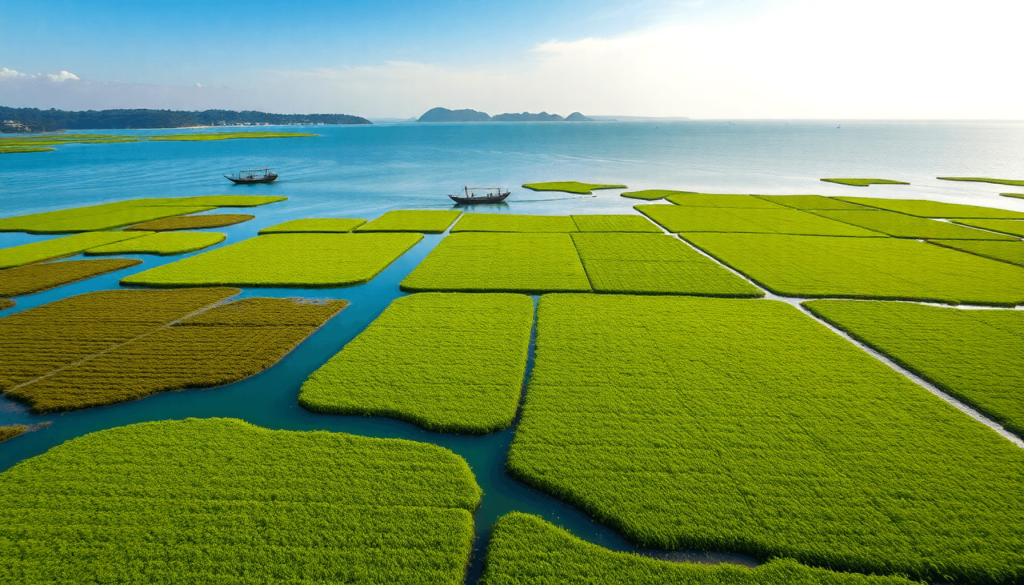
Indonesia is quickly becoming the world’s leading supplier of seaweed, with an impressive 44.46% market share and an export value of USD 388.13 million in 2022. This remarkable growth puts Indonesia at the forefront of the global seaweed industry, showing its potential as a major player in agricultural exports.
Indonesia’s rise as a seaweed supplier has several important implications:
- Economic Impact: The significant export value greatly benefits Indonesia’s economy, supporting local communities and promoting economic growth in coastal areas.
- Industry Significance: The seaweed industry is crucial for diversifying agricultural exports and reducing reliance on traditional commodities.
- Global Demand: Increasing demand for seaweed-based products such as carrageenan and alginate indicates shifting consumer preferences, further strengthening Indonesia’s position in international markets.
Indonesia’s success as the top seaweed supplier not only highlights its competitive advantage but also emphasizes the importance of sustainable practices and quality control throughout the supply chain. As this sector continues to expand, its contributions will undoubtedly influence both local economies and global markets.
Read More: Government Pushes Seaweed Downstreaming to Increase Added Value
Indonesia’s Seaweed Industry
Indonesia’s tropical seaweed production plays a crucial role in its status as a leading global supplier. Key production regions include:
- Bali: Known for its perfect farming conditions, Bali contributes significantly to both production volume and quality.
- East Nusa Tenggara: This area has become another hotspot due to its favorable climate and water conditions.
- West Nusa Tenggara: Known for its large coastal areas suitable for growing various seaweed species.
The main seaweed species produced in Indonesia are:
- Gracilaria: Widely used as a source of agar, Gracilaria is essential for food and pharmaceutical industries. Its gel-forming properties make it valuable in products like ice cream and yogurt.
- Kappaphycus: This species is primarily harvested for carrageenan, a thickening agent utilized extensively in the food industry, including soups and sauces.
- Eucheuma: Known for providing high-quality carrageenan, Eucheuma is also important for producing eco-friendly packaging materials.
These species not only cater to domestic needs but also meet international demand. By exporting these valuable products, Indonesia strengthens its position in the global market. The seaweed industry continues to thrive due to ongoing investments and innovations in cultivation techniques. As the world shifts towards sustainable food sources, Indonesia’s seaweed sector stands ready to meet rising demands effectively.
Growth Trends and Market Demand
Indonesia’s seaweed industry has experienced remarkable growth in recent years. Notable trends include:
- Export Growth Rate: The export growth rate soared to 78.3% year-on-year, reflecting the increasing global appetite for Indonesian seaweed products.
- Production Volume Surge: Production levels jumped from 3.9 million tons to 9.6 million tons over the past decade, illustrating the sector’s rapid expansion.
Several factors contribute to this impressive growth trajectory:
- Rising Global Demand: Products derived from seaweed, particularly carrageenan, have become essential in various industries such as food, cosmetics, and pharmaceuticals.
- Carrageenan serves as a thickening agent and stabilizer in food items like ice cream and yogurt.
- Increased popularity of plant-based diets has led to a surge in demand for seaweed as a source of alternative proteins.
- Innovative Applications: Beyond traditional uses, seaweed is now sought after for:
- Eco-friendly food packaging materials
- Raw ingredients in sauces and seasonings
- Development of novel food products that cater to health-conscious consumers
- Supportive Ecosystem: Platforms like Ralali are pivotal in connecting seaweed producers with processing industries, facilitating end-to-end solutions that enhance market reach.
This combination of factors highlights Indonesia’s strategic position in the global seaweed market, indicating sustained demand and potential for further growth.
Quality Control and Sustainability Practices
Indonesia’s status as the world’s leading seaweed supplier, with a 44.46% market share and an export value of USD 388.13 million in 2022, depends on strong quality control measures and sustainable farming practices.
Importance of High-Quality Standards
Maintaining high-quality standards is crucial throughout the supply chain. Key points include:
- Product Consistency: Ensures that seaweed products meet international safety and quality requirements.
- Market Competitiveness: High-quality seaweed attracts global buyers, enhancing Indonesia’s reputation as a reliable supplier.
- Traceability: Implementing traceability systems allows producers to track their products from farm to table, providing transparency for consumers.
Role of Sustainable Farming Practices
Sustainable farming practices play a vital role in securing long-term viability for both producers and ecosystems. These practices include:
- Environmental Preservation: Protecting marine biodiversity by avoiding destructive harvesting techniques.
- Resource Management: Implementing responsible farming methods to prevent overexploitation of seaweed resources.
- Community Engagement: Involving local communities in sustainable practices fosters economic growth while maintaining ecological balance.
Indonesia faces sustainability challenges but is equipped with innovative solutions. The integration of quality control measures alongside sustainable farming can position the country to capitalize on growing global demand for seaweed-derived products.

Export Performance Analysis
In 2022, Indonesia’s seaweed export statistics revealed a remarkable performance with a total export value of USD 388.13 million. This figure highlights the country’s significant role in the global seaweed market.
Key Data Points
- Total Export Volume: Approximately 1.5 million metric tons of various seaweed types.
- Dried Seaweeds: Accounted for about 60% of the total export value, reflecting high demand in international markets.
- Processed Seaweeds: Represented around 30%, indicating a growing trend towards value-added products.
Types of Seaweeds
- Carrageenan: Commonly utilized in food products, accounts for a substantial portion of processed exports.
- Agar and Alginate: Gaining traction in both culinary and industrial applications.
This robust export performance underscores Indonesia’s strategic position as a leading seaweed supplier. The combination of various seaweed types not only caters to different industries but also establishes Indonesia as a reliable source of high-quality seaweed products on the international stage.
Major Export Destinations and Their Market Share
Indonesia’s position as a leading seaweed supplier is significantly supported by key export markets. The main countries that import Indonesian seaweeds are:
- Japan: As one of the largest importers, Japan accounts for a substantial portion of Indonesia’s seaweed exports. The demand for various seaweed types, particularly those used in traditional cuisine and processed food products, remains strong.
- United States: A growing market for seaweed-derived products, the U.S. imports large volumes of dried and processed seaweeds. The increasing popularity of healthy eating trends contributes to this rise.
- China: This country represents another significant destination, attracting Indonesian seaweed due to its application in both culinary uses and industrial applications.
- South Korea: Known for its rich culinary traditions that incorporate seaweed, South Korea continues to be a vital market for Indonesian suppliers.
- European Union: Countries within the EU are increasingly recognizing the versatility of Indonesian seaweed in food production and eco-friendly packaging solutions.
These markets collectively demonstrate Indonesia’s strong export capabilities and highlight the importance of strategic partnerships to maintain competitive advantages in the global seaweed industry.
Challenges Facing The Industry And Opportunities For Growth
Indonesia’s seaweed industry, while thriving, faces several challenges that could impact its growth trajectory.
1. Regulatory Compliance Issues
Exporters often encounter barriers related to regulatory compliance, particularly in stringent markets like Europe and North America. Adhering to these regulations can limit access and reduce competitiveness.
2. Diversifying Product Offerings
There is significant potential for expanding product lines beyond traditional flakes or powders. Innovations in seaweed-based products, such as eco-friendly packaging and plant-based proteins for alternative meats, can capture new market segments.
3. Market Expansion Opportunities
Indonesia’s leading position with a 44.46% market share and an export value of USD 388.13 million in 2022 provides a robust platform for further expansion. Identifying emerging markets could enhance global presence.
4. Sustainability as a Selling Point
As consumers increasingly prioritize sustainability, adopting eco-friendly farming practices may attract environmentally conscious buyers.
By addressing regulatory hurdles and diversifying offerings, Indonesia can solidify its status as the world’s leading seaweed supplier while tapping into new growth avenues.
Government Initiatives Supporting The Sector
Indonesia’s government has implemented several programs to strengthen the seaweed industry, ensuring it remains competitive on a global scale. These initiatives focus on enhancing productivity, sustainability, and market access for farmers and exporters.
Key government programs include:
- Support for Research and Development: Investments in R&D to improve cultivation techniques, disease management, and processing technologies.
- Funding Solutions: Access to funding solutions available through local banks or institutions aimed at enhancing productivity levels among farmers/exporters alike. This financial support enables producers to invest in better equipment and training.
- Ralali Marketplace: A pivotal platform that connects seaweed producers with processing industries. It facilitates raw material procurement and product distribution, expanding market reach across Indonesia.
- Training Programs: Government-led training sessions focused on sustainable farming practices and quality control to ensure products meet international standards.
These efforts are crucial as Indonesia solidifies its position as the world’s leading seaweed supplier, boasting a 44.46% market share and an impressive export value of USD 388.13 million in 2022. Through these initiatives, the government aims to maintain growth momentum within this strategic sector.
FAQs (Frequently Asked Questions)
As of 2022, Indonesia holds a significant 44.46% market share in the global seaweed industry, making it the world’s leading supplier.
In 2022, Indonesia’s seaweed export value reached USD 388.13 million, highlighting its economic importance and contribution to the seaweed industry.
Key production regions for seaweed in Indonesia include Bali, which plays a crucial role in the country’s status as a top seaweed supplier, focusing on species like Gracilaria and Kappaphycus.
The growth of Indonesia’s seaweed industry is driven by rising global demand for carrageenan and other seaweed-derived products, resulting in an impressive export growth rate of 78.3% year-on-year.
Pingback:Indonesia's Seaweed Production Reaches 10.7 Million Tons Wet in 2023 - Indonesia Supplier
Pingback:Government Pushes Seaweed Downstreaming to Increase Added Value - Indonesia Supplier