
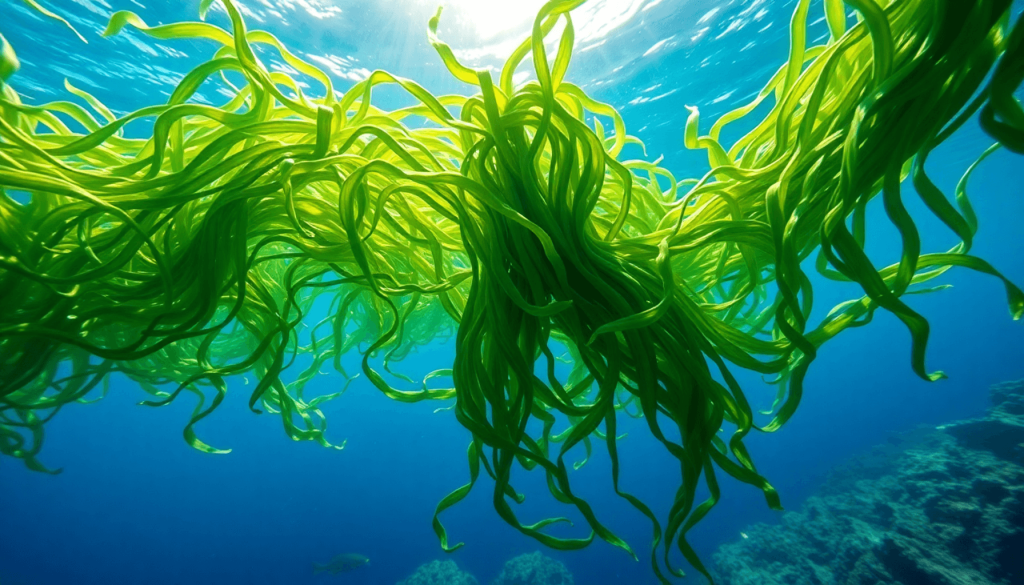
Indonesia’s seaweed production reached 10.7 million tons wet in 2023. This figure reflects a significant achievement in the national seaweed industry. Seaweed not only plays an important role as a commodity for the economy but also plays a major role in meeting the needs of domestic and international markets.
Significance of Seaweed in the National Industry
- Economic Source: Seaweed contributes to the income of farmers and entrepreneurs in the fisheries sector.
- Diverse Products: Used in various food, pharmaceutical, and cosmetic products.
- Job Opportunities: Encourages the creation of jobs in coastal areas.
Purpose of the Article
This article aims to:
- Review the achievements of seaweed production in Indonesia in 2023.
- Analyze the developments and challenges faced by this industry.
- Provide insights into the potential global market and further development of the seaweed sector.
With a focus on current data and in-depth analysis, this article will provide a comprehensive overview of the seaweed industry in Indonesia.

Seaweed Production in Indonesia
In 2023, the total production of 10.7 million tons of wet seaweed in Indonesia reflects a significant achievement in this sector. The detailed figures show that production growth reached 12% compared to the previous year, indicating a continuing positive trend.
Some factors that influence this growth include:
- Increased market demand: Global demand for seaweed-based products is increasing, especially in the food and cosmetics industries.
- Technological innovation: The use of modern cultivation methods has helped increase crop yields.
- Government support: Development programs from the government and platforms like Ralali provide better access for producers.
This growth creates new opportunities for the seaweed industry in Indonesia, encouraging business actors to be more active in utilizing the potential of this sector.
Comparison with Other Producers
Indonesia’s seaweed production in 2023 shows significant achievements, but it is still far behind China, which is the largest seaweed producer in the world. Data shows that China produces 20.8 million tons of seaweed, almost double Indonesia’s production.
Several factors contribute to China’s dominance in this industry:
- Production Scale: China has more advanced infrastructure and technology to increase crop yields.
- Variety of Seaweed Types: With various species cultivated, China can meet diverse global demand.
- Strong Export Market: China has a wide distribution network, facilitating access to international markets.
This comparison highlights Indonesia’s growth potential in the seaweed industry. Although currently in second place, there are great opportunities for Indonesia to increase its production capacity and compete more effectively in the global market.
Production Trends in Recent Years
Indonesia’s seaweed production reached 10.7 million tons wet in 2023. Some patterns of growth and decline can be seen in the seaweed production trends in recent years:
Stable Growth
There is a significant year-on-year increase, indicating great potential in this sector.
Decline
In certain periods, environmental factors such as climate change and extreme weather conditions lead to a decrease in production.
The factors influencing this trend include:
- Global Market Demand: Increase in demand for seaweed-based products in the international market.
- Technological Innovation: Advances in cultivation and processing techniques that improve production efficiency.
- Government Support: Initiatives from the government to encourage the growth of the seaweed industry through supportive programs.
Considering these aspects, the Indonesian seaweed industry shows bright prospects for the future.
Dominance of Kappaphycus alvarezii and Gracilaria in Indonesian Seaweed Production
Kappaphycus alvarezii and Gracilaria are the main types of seaweed that dominate production in Indonesia. These two types have significant characteristics and uses in various industries.
Kappaphycus alvarezii
- Known as a source of carrageenan, it is used as a thickening and stabilizing agent in food products.
- Has a chewy texture, often utilized in the production of ice cream, yogurt, and beverages.
Gracilaria
- An important source of alginate, it functions as a gelling agent.
- Used in the production of sauces, pasta, and also as an alternative raw material for plant-based protein.
The presence of these two types of seaweed not only strengthens the food industry but also opens up new opportunities in the pharmaceutical and cosmetic sectors. Research is ongoing to explore the further potential of Kappaphycus alvarezii and Gracilaria in supporting the sustainability of the seaweed industry in Indonesia.

Distribution of Production in the Main Seaweed-Producing Provinces in Indonesia
Indonesia, as one of the largest seaweed producers in the world, has several provinces that contribute significantly to national production. Some of the seaweed-producing provinces in Indonesia include:
- South Sulawesi: Being one of the main areas, with a climate and sea conditions that support the growth of seaweed.
- Maluku: Has many islands and waters that are ideal for seaweed cultivation.
- East Nusa Tenggara (NTT): Known for its high-quality seaweed, especially the Kappaphycus alvarezii variety.
- Aceh: Has great potential in seaweed production and local community support for cultivation.
The contribution from these regions is very important in meeting domestic and export demand, making Indonesia a major player in the global seaweed industry. Mapping production areas helps to understand the dynamics of growth in this industry.
Utilization of Seaweed for Food, Pharmaceutical, Cosmetic Products, and Export
Indonesia’s seaweed production reached 10.7 million tons wet in 2023. Of this amount, 77% is used for food and beverage products, while 23% is utilized in the pharmaceutical and cosmetic sectors.
Types of Food Products
Seaweed is the main raw material in various food products, including:
- Ice cream: Uses carrageenan as a thickener.
- Yogurt: Used as a stabilizer to improve texture.
The application of seaweed in the food industry not only adds flavor but also enhances nutritional value.
Applications in Health and Beauty
In the pharmaceutical and cosmetic sectors, seaweed has many benefits. Some of its applications include:
- Beauty products: Used in face masks and moisturizers due to their moisturizing properties.
- Health supplements: Contains essential nutrients that are beneficial for body health.
Access to the global market is becoming increasingly wide with the support of platforms like Ralali, which help market seaweed-based processed products. With this potential, the seaweed industry in Indonesia continues to grow rapidly.
Composition of Dry Seaweed Exports vs. Processed Products from Indonesia to the Global Market
The production of seaweed in Indonesia is not only focused on quantity but also on the composition of the exported products. Data shows that:
- 66.61% of total exports consist of dry seaweed.
- 33.39% are processed products.
Export value analysis shows that dry seaweed has stable demand in the international market, serving as a main raw material for various industrial applications. On the other hand, processed products such as carrageenan and agar are increasingly sought after due to their functions in the food and pharmaceutical industries.
This comparison provides insights into the development strategies that need to be implemented to increase the added value of processed products and encourage diversification in seaweed exports. Designing innovative solutions in seaweed processing can create new opportunities in the global market and enhance Indonesia’s competitiveness in this sector.
Global Market Potential and Seaweed Industry Development in Indonesia
The seaweed industry at the global level has a promising market projection, with its value estimated to reach US$11.8 billion by 2030. Some significant investment opportunities in this industry include:
- Product Innovation: Development of seaweed-based products, such as food, cosmetics, and pharmaceutical raw materials.
- Cultivation Technology: Investment in agricultural and cultivation technology to improve crop yields and production efficiency.
- Sustainable Practices: Environmentally friendly approaches in the processing and utilization of seaweed to meet global demand.
Indonesia, as one of the largest producers of seaweed, has great potential to take advantage of this trend. Support from platforms like Ralali can expand market access for local producers, facilitate product innovation, and optimize the supply chain. With the right strategy, the Indonesian seaweed industry can become a key player in the continuously growing global market.
Challenges in the Seaweed Industry in Indonesia and Potential Solutions
The seaweed processing industry faces several challenges, even though Indonesia’s seaweed production reached 10.7 million tons wet in 2023. Some of the obstacles faced by industry players include:
- Technological Limitations: Many producers have not adopted advanced technology to improve efficiency and product quality.
- Price Fluctuations: Price instability of raw materials can harm farmers and industry players.
- Market Access: Some producers have difficulty penetrating international markets.
Potential solutions include increased access to technology, the implementation of more aggressive marketing strategies, and support from platforms like Ralali to expand distribution networks.
FAQs (Frequently Asked Questions)
The production of seaweed in Indonesia reached 10.7 million tons wet in 2023.
The two main types of seaweed produced in Indonesia are Kappaphycus alvarezii and Gracilaria.
Indonesia produces 10.7 million tons of seaweed, while China, as the largest producer, recorded a production of 20.8 million tons.
Seaweed is used in various products such as food and beverages (77%), as well as pharmaceuticals and cosmetics (23%). Examples of products include ice cream and yogurt.
Pingback:Indonesian Ministry of Marine Affairs and Fisheries (KKP) Targeting National Seaweed Production of 12.3 Million Tons by 2024 - Indonesia Supplier