
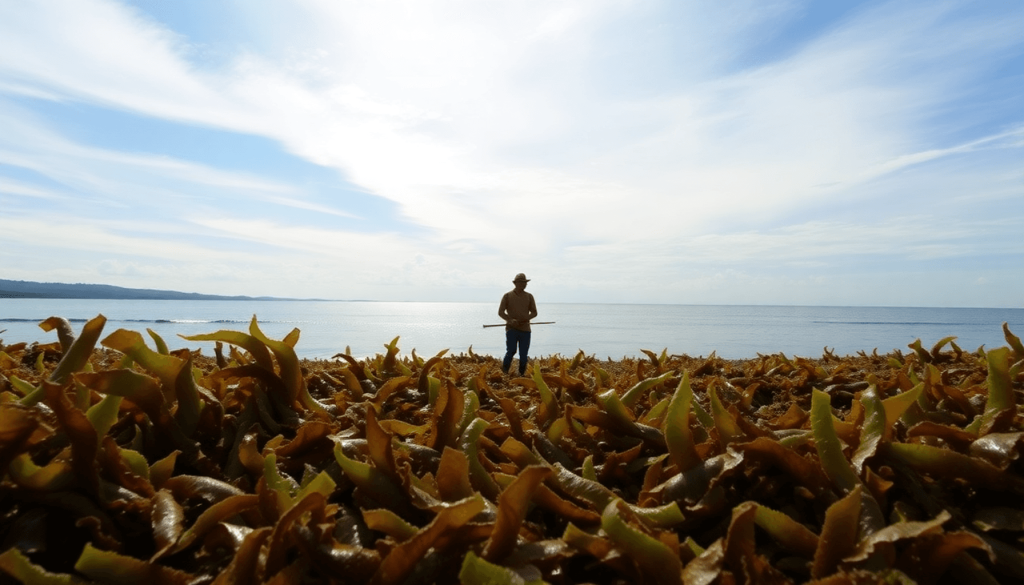
Indonesia has a wide variety of seaweeds, making it an important country in the study of nutrient-rich tropical seaweeds. These seaweeds have great potential in livestock nutrition, especially for animals like cows and sheep that digest food differently.
However, there is a significant lack of detailed research on the nutrients found in tropical seaweeds. The current studies are not enough, which shows that there is an urgent need for specific investigations into their nutritional qualities and benefits for livestock.
This article aims to evaluate the nutrient content and methane reduction potential of selected tropical seaweeds as ruminant feed supplements. Key objectives include:
- Assessing the nutritional value of various seaweed species.
- Exploring their role in reducing methane emissions during digestion.
- Identifying practical applications for enhancing livestock health and sustainability.
Unlocking these potentials may not only contribute to improved sustainable ruminant feed solutions but also align with broader environmental goals within Indonesia’s agricultural sector.
Research Background
The integration of seaweed as livestock feed supplements has garnered increasing interest due to its nutritional advantages and environmental benefits. Seaweeds are rich in essential nutrients, making them an attractive alternative to conventional feed sources. Their inclusion in livestock diets can potentially enhance animal health and productivity.
Traditional ruminant feeding practices face significant challenges, including:
- Low digestibility of conventional feeds, which can limit nutrient absorption.
- High methane emissions produced during digestion, contributing to greenhouse gas effects.
These challenges have prompted researchers to explore innovative solutions. The potential of seaweed lies in its ability to:
- Enhance rumen fermentation, facilitating better nutrient breakdown.
- Reduce methane production, thus addressing environmental concerns associated with livestock farming.
Studies indicate that certain seaweed species may significantly lower methane emissions while improving overall digestion efficiency. This dual benefit positions seaweed not only as a sustainable feed supplement but also as a key player in reducing the carbon footprint of livestock production in Indonesia. Embracing these advantages could lead to more sustainable agricultural practices and improved food security for the nation.
Methodology
The study focuses on four selected seaweed species known for their potential in ruminant nutrition:
- Laminaria sp.: A brown seaweed rich in polysaccharides, beneficial for digestive health.
- Padina australis: Notable for its high mineral content and ability to thrive in various marine environments.
- Eucheuma cottonii: Commonly used for its carrageenan, it also offers nutritional benefits to livestock.
- Gracilaria sp.: Valued for its protein content and capacity to enhance rumen fermentation.
The collection site, Kelapa Beach in Tuban, East Java, is significant due to its diverse marine ecosystem, providing an ample variety of seaweed samples. This location supports sustainable harvesting practices and ensures the availability of nutrient-rich seaweeds.
Analytical methods employed in this research include:
- Proximate analysis: Determines the basic nutritional components such as moisture, ash, fat, and protein content.
- Mineral content determination: Assesses essential macrominerals (Na, K, Ca, Mg) and microminerals (Fe, Mn, Cu, Zn) using advanced spectroscopic techniques.
- Fermentation characteristics assessment: Evaluates the impact of seaweed inclusion on rumen fermentation patterns through in vitro studies.
These methods provide a comprehensive understanding of the nutritional value and potential effectiveness of tropical seaweeds as ruminant feed supplements.
Key Findings
The nutrient evaluation of selected tropical seaweeds has revealed significant insights into their potential as sustainable ruminant feed. The analysis focused on key parameters such as water content, ash content, and mineral richness, which are crucial for assessing their nutritional value.
High Water Content
The water content in these seaweeds ranged from 69.41% to 86.33%, indicating a substantial moisture presence that can impact feed formulation. This high water percentage also suggests the need for consideration in storage and transportation, as it may influence shelf-life and processing methods.
Ash/Mineral Content
The ash content varied significantly, from 23.42% to 65.63% across species. This variation highlights the mineral richness of tropical seaweeds and their potential role in supplying essential nutrients to ruminants.
Nutritional Composition
Variations were noted in both dry matter and crude protein levels among the analyzed species. The differences in organic matter composition contribute to their energy content, which is highly relevant for ruminants:
- Laminaria sp. exhibited higher crude protein levels, making it potentially more beneficial for enhancing nitrogen intake.
- Eucheuma cottonii showed promising energy values due to its favorable organic matter profile.
Mineral Profile
The presence of macrominerals enhances the overall health of livestock:
- Sodium (Na)
- Potassium (K)
- Calcium (Ca)
- Magnesium (Mg)
These minerals play vital roles in metabolic functions, electrolyte balance, and bone health. Their contributions can lead to improved growth rates and reproductive performance in ruminants.
Iron (Fe), Manganese (Mn), Copper (Cu), Zinc (Zn) are also present in varying concentrations.
These trace elements support various biological functions; however, caution is warranted regarding heavy metal levels, which necessitates further investigation to ensure safety and efficacy when incorporated into animal diets.
The nutrient evaluation highlights the potential of tropical seaweeds not only as a sustainable feed option but also as a rich source of essential nutrients that can address specific dietary deficiencies in ruminant nutrition. Understanding these findings will pave the way for future research into practical applications within livestock feeding strategies in Indonesia.
Implications for Sustainable Livestock Farming in Indonesia
Integrating nutrient-rich tropical seaweeds into livestock diets presents significant benefits for sustainable agriculture practices in Indonesia. The high nutritional profile of these seaweeds can enhance feed efficiency, ultimately leading to improved animal health and productivity. By diversifying ruminant diets with seaweed, farmers can reduce their reliance on conventional feed sources, which often rely on resource-intensive agricultural practices.
Key advantages include:
- Carbon footprint reduction: Seaweeds have the potential to lower methane emissions produced during digestion, addressing a critical environmental concern within livestock farming.
- Nutrient density: The rich mineral and protein content of tropical seaweeds supports optimal growth and development in livestock, enabling healthier herds.
The role of the Ralali marketplace is vital in this transition. With its end-to-end solutions for producers, Ralali facilitates access to markets and funding opportunities, allowing seaweed farmers to thrive.
Market access: Producers can reach processing industries more effectively, enhancing distribution efficiency.
Funding solutions: Ralali Plus supports business development, empowering seaweed enterprises to expand operations.
Harnessing these resources can significantly contribute to sustainable livestock farming in Indonesia while promoting economic resilience within the seaweed sector.
Conclusion & Future Directions
Adopting innovative feed solutions such as tropical seaweeds is crucial for achieving sustainable livestock farming in Indonesia. The potential of these nutrient-rich seaweeds lies in their ability to enhance feed efficiency and reduce dependency on conventional feed sources.
Key considerations include:
- Establishing practical feeding strategies
- Evaluating long-term effects on animal performance
- Assessing product quality
Future prospects for seaweed use in feed are promising but require comprehensive research. Investigating the optimal inclusion rates and understanding the interactions within ruminant diets will unlock further benefits. Continued exploration in this field holds the key to transforming livestock nutrition while supporting sustainability goals in Indonesian agriculture.
FAQs (Frequently Asked Questions)
Tropical seaweeds offer numerous benefits as ruminant feed, including high nutritional value, potential for methane reduction during digestion, and improved feed efficiency. Their rich mineral content can enhance animal health, while their incorporation into livestock diets aligns with sustainable agricultural practices.
The study focused on several seaweed species including Laminaria sp., Padina australis, Eucheuma cottonii, and Gracilaria sp. These species were selected for their ecological significance and potential as effective ruminant feed supplements.
Traditional ruminant feeding practices often encounter challenges such as low digestibility of feed and high methane emissions during digestion. Incorporating seaweeds into diets can enhance rumen fermentation and significantly reduce methane production, addressing these critical issues.
The nutrient content was evaluated through proximate analysis methods, mineral content determination, and assessment of fermentation characteristics. This comprehensive approach allowed researchers to quantify water content, ash/mineral levels, dry matter, crude protein, and organic matter composition.
Pingback:Unlocking Seaweed Potential: Diversity and Community Structure Analysis on Aceh's West Coast for Sustainable Aquaculture - Indonesia Supplier