
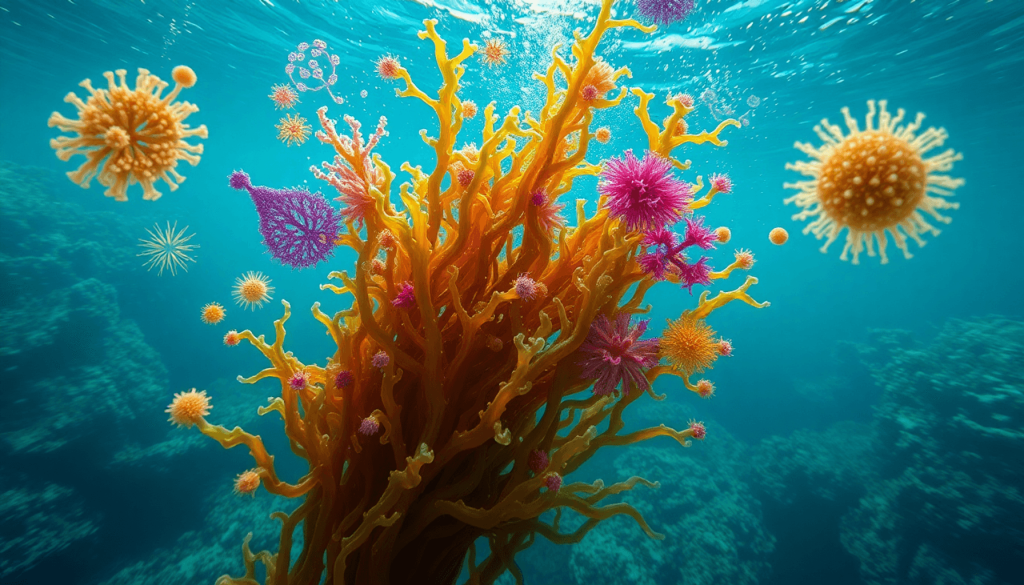
In the vast blue expanse of our oceans, seaweeds harbor a hidden treasure – beneficial bacteria that may hold the key to addressing one of modern medicine’s most pressing challenges: antibiotic resistance. The microorganisms that reside on the surfaces of marine algae represent an untapped reservoir of bioactive compounds with remarkable antibacterial properties.
The global healthcare system faces a growing crisis as traditional antibiotics lose effectiveness against evolving bacterial strains. According to the World Health Organization, antibiotic resistance is one of the top ten threats to global public health, potentially leading to millions of deaths annually by 2050 if alternative solutions aren’t developed. This alarming trend has accelerated the search for novel antibacterial agents from natural sources.
Seaweed-associated bacteria have emerged as particularly promising candidates in this quest. These microbes form complex ecological relationships with their hosts, producing bioactive compounds that protect both the seaweed and potentially human health. Despite their potential, these marine microorganisms remain largely unexplored in the context of combating skin infections.
Skin conditions caused by bacterial pathogens affect millions worldwide. Propionibacterium acnes, the primary causative agent of acne vulgaris, and Staphylococcus epidermidis, associated with various skin infections, significantly impact quality of life for many patients. As resistance to conventional treatments increases, the need for innovative approaches becomes increasingly urgent.
This comprehensive investigation explores the antibacterial potential of bacteria isolated from seaweed against common skin pathogens. By identifying and characterizing these natural defenders, we aim to contribute to the development of sustainable, effective alternatives to synthetic antibiotics.
Methodology: A Systematic Approach to Harnessing Marine Bacterial Potential
Seaweed Sample Collection: Ensuring Quality and Diversity
Our research began with the careful collection of diverse seaweed samples from the pristine waters of Teluk Awur, Jepara, Indonesia. This location was specifically chosen for its rich marine biodiversity and relatively unpolluted ecosystem, providing an ideal environment for studying natural bacterial communities.
The collection process followed rigorous protocols to ensure sample integrity:
- Selection of visibly healthy seaweed specimens exhibiting characteristic morphology and coloration
- Implementation of sterile collection techniques to minimize contamination
- Immediate storage in sterile containers filled with natural seawater
- Temperature-controlled transportation to maintain bacterial viability
- Comprehensive documentation of collection sites, including GPS coordinates, water temperature, salinity, and pH
This meticulous approach ensured that the bacterial communities remained intact and representative of their natural state, providing a solid foundation for subsequent isolation efforts.
Isolation and Purification Techniques: Capturing Bacterial Diversity
The isolation of seaweed-associated bacteria employed a multi-faceted approach designed to capture the full spectrum of microbial diversity:
- Surface sterilization protocols to distinguish between epiphytic (surface-dwelling) and endophytic (internal) bacteria
- Mechanical separation techniques, including gentle scraping and sonication, to dislodge surface-attached bacteria
- Serial dilution in sterile seawater (10^-1 to 10^-6) to accommodate varying bacterial concentrations
- Utilization of diverse growth media, including Marine Agar, Nutrient Agar with 3% NaCl, and specialized selective media
- Incubation under various conditions (aerobic/anaerobic, different temperatures) to accommodate diverse growth requirements
Following initial isolation, purification procedures ensured the establishment of mono-species cultures:
- Colony morphology assessment and selection of distinct colony types
- Multiple rounds of streak plating on fresh media
- Microscopic examination to confirm culture purity
- Preservation of pure isolates in glycerol stocks at -80°C for long-term storage
These comprehensive isolation and purification techniques yielded a diverse collection of bacterial isolates, forming the foundation for subsequent antibacterial screening.
Antibacterial Screening: Identifying Promising Candidates
A systematic screening approach identified bacterial isolates with significant antibacterial activity:
- Primary screening via cross-streak method against indicator strains
- Secondary screening using agar well diffusion assays to quantify inhibition zones
- Tertiary screening through disk diffusion methods to confirm reproducibility
- Assessment against clinically relevant strains of P. acnes and S. epidermidis obtained from certified culture collections
- Implementation of positive controls (commercial antibiotics) and negative controls (sterile media) to validate results
Quantitative evaluation included:
- Measurement of inhibition zone diameters using digital calipers
- Calculation of Minimum Inhibitory Concentration (MIC) via broth microdilution methods
- Determination of Minimum Bactericidal Concentration (MBC) to distinguish between bacteriostatic and bactericidal effects
- Time-kill kinetics studies for selected potent isolates to understand the dynamics of antibacterial activity
This multi-tiered screening approach enabled the identification of bacterial isolates with consistent and significant antibacterial activity against target skin pathogens.
Molecular Identification: Revealing Bacterial Identity and Diversity
Advanced molecular techniques provided precise identification of promising bacterial isolates:
- Genomic DNA extraction using optimized protocols for marine bacteria
- PCR amplification of the 16S rRNA gene using universal bacterial primers
- High-throughput sequencing with next-generation sequencing platforms
- Sequence analysis using bioinformatics tools including BLAST, MEGA, and RDP Classifier
- Construction of phylogenetic trees to understand evolutionary relationships
- Whole-genome sequencing for selected high-potential isolates
Additional molecular characterization included:
- Detection of biosynthetic gene clusters associated with antimicrobial production
- PCR screening for specific antibiotic resistance genes
- Analysis of horizontal gene transfer potential
This comprehensive molecular analysis provided a robust taxonomic framework for understanding the diversity of antibacterial seaweed-associated bacteria and their genetic potential.
Results and Discussion: Unveiling the Antibacterial Potential
Diversity of Bacterial Isolates: A Microbial Treasure Trove
The isolation efforts yielded a remarkable diversity of bacterial isolates, reflecting the complex microbial ecosystem associated with seaweeds. Morphological characterization revealed distinct categories of bacteria, each with unique characteristics:
Rod-shaped bacteria (Bacilli):
- Predominant morphology, representing approximately 60% of isolates
- Varying in size from short coccobacilli to elongated filamentous forms
- Colony appearances ranging from smooth and glossy to rough and matte
- Pigmentation including cream, yellow, orange, and various shades of brown
Coccus-shaped bacteria:
- Comprising approximately 25% of isolates
- Including both single cocci and clustered arrangements
- Typically forming smaller colonies with distinct margins
- Often exhibiting vibrant pigmentation, particularly yellows and oranges
Filamentous bacteria:
- Representing approximately 15% of isolates
- Forming complex, spreading colonies with aerial hyphae
- Developing characteristic spore structures in many cases
- Producing distinct earthy odors and powdery textures when mature
This morphological diversity suggests adaptation to different microniches on the seaweed surface, potentially contributing to the host’s defense against environmental pathogens through competitive exclusion and production of antimicrobial compounds.
The diversity observed extends beyond morphology to physiological characteristics:
- Salt tolerance ranging from moderate halophiles to extreme halophiles
- Temperature preferences spanning psychrophilic to thermotolerant
- Varying oxygen requirements including strict aerobes, facultative anaerobes, and microaerophiles
- Enzymatic profiles indicating diverse metabolic capabilities
This rich bacterial diversity forms the foundation for the remarkable antibacterial potential observed in subsequent screening assays.
Antibacterial Activity Evaluation: Natural Weapons Against Skin Pathogens
The antibacterial screening revealed compelling evidence of activity against common skin pathogens. When challenged against P. acnes and S. epidermidis, several bacterial isolates demonstrated significant inhibitory effects:
Direct Challenge Test Results:
- Approximately 35% of isolates showed inhibitory activity against at least one test organism
- 18% exhibited strong activity (inhibition zones >15mm) against P. acnes
- 22% demonstrated strong activity against S. epidermidis
- 12% showed broad-spectrum activity against both pathogens
- Particularly potent activity observed in isolates belonging to the Bacillus, Pseudoalteromonas, and Streptomyces genera
Minimum Inhibitory Concentration (MIC) Findings:
- MIC values for potent isolates ranged from 16-256 μg/mL against P. acnes
- MIC values for S. epidermidis ranged from 32-128 μg/mL
- Several isolates showed comparable or superior effectiveness to commercial antibiotics
- Time-kill studies revealed rapid bactericidal action in select isolates, with >99% reduction in viable cells within 6 hours
Notable patterns emerged during the evaluation:
- Pigmented bacterial isolates frequently demonstrated stronger antibacterial activity
- Gram-positive isolates showed a higher frequency of antibacterial properties
- Isolates from certain seaweed species (particularly red algae) exhibited enhanced activity
The consistency and potency of antibacterial effects suggest that these seaweed-associated bacteria produce bioactive compounds with significant therapeutic potential. The diversity of active isolates further indicates multiple mechanisms of action, potentially addressing the challenge of antibiotic resistance through novel targets and pathways.
Molecular Identification Insights: Taxonomic Diversity and Evolutionary Relationships
The molecular identification of bacterial isolates with antibacterial properties revealed a diverse taxonomic composition. 16S rRNA gene sequencing identified several key genera:
Predominant Genera:
- Bacillus: Representing 28% of antibacterial isolates, with B. subtilis and B. pumilus as common species
- Pseudomonas: Accounting for 17% of active isolates, particularly P. fluorescens group members
- Vibrio: Comprising 14% of antibacterial strains, primarily non-pathogenic environmental species
- Streptomyces: Representing 12% of active isolates, known for their prolific antibiotic production
- Pseudoalteromonas: Accounting for 10% of antibacterial strains, particularly pigmented species
- Other genera: Including Alteromonas, Micrococcus, Marinomonas, and Halomonas (19% collectively)
Phylogenetic analysis revealed several significant findings:
- Clear clustering of isolates by taxonomic groups, with high bootstrap support
- Evidence of novel strains with less than 97% sequence similarity to known species
- Correlation between phylogenetic position and antibacterial potential in some clades
- Indication of horizontal gene transfer in certain antimicrobial biosynthetic pathways
The genetic diversity observed underscores the rich potential of seaweed-associated bacteria as a source of novel antibacterial compounds. The presence of both well-studied antibiotic producers and potentially novel species suggests untapped resources for natural product discovery.
Whole-genome sequencing of selected isolates revealed biosynthetic gene clusters associated with antimicrobial production, including:
- Non-ribosomal peptide synthetase (NRPS) clusters
- Polyketide synthase (PKS) pathways
- Bacteriocin production systems
- Terpene synthesis pathways
These findings provide a molecular basis for the observed antibacterial activities and highlight the genetic capacity of seaweed-associated bacteria to produce diverse bioactive compounds.
Ecological and Biotechnological Implications: From Nature to Application
Ecological Roles of Seaweed-Associated Bacteria: Nature’s Defense System
Seaweed-associated bacteria perform critical ecological functions that extend beyond their own survival. Their complex interactions with host seaweeds create a sophisticated defense network that protects against environmental threats:
Antimicrobial Production:
- Production of diverse antimicrobial compounds that create a protective barrier around the seaweed
- Selective inhibition of potential pathogens while maintaining beneficial microbial communities
- Chemical defense against biofilm formation by competing organisms
- Production of quorum-sensing inhibitors that disrupt pathogen communication
- Temporal variation in antimicrobial production in response to environmental stressors
Nutrient Cycling and Acquisition:
- Nitrogen fixation by certain bacterial species, enhancing nitrogen availability to seaweeds
- Phosphate solubilization, making this essential nutrient more accessible
- Production of siderophores that chelate iron, limiting its availability to pathogens
- Degradation of complex organic matter into usable nutrients
- Carbon cycling within the seaweed-bacteria microenvironment
Symbiotic Relationships:
- Mutualistic exchanges where bacteria receive habitat and nutrition while providing protection
- Co-evolution of defense mechanisms against common threats
- Induced resistance in seaweeds triggered by bacterial signaling molecules
- Selective recruitment of beneficial bacteria through chemical cues
- Biofilm formation that enhances resistance to environmental stressors
These ecological roles highlight the sophisticated natural system that has evolved between seaweeds and their associated bacteria. Understanding these interactions provides insights into nature’s strategies for combating pathogens, offering inspiration for biotechnological applications.
Biotechnological Potential of Seaweed-Associated Bacteria: Translating Nature’s Solutions
The remarkable antibacterial properties exhibited by seaweed-associated bacteria present diverse opportunities for biotechnological applications, particularly in addressing skin conditions:
Skincare Innovations:
- Development of natural preservatives for cosmetic formulations
- Creation of targeted treatments for acne and other P. acnes-associated conditions
- Formulation of anti-inflammatory skincare products based on bacterial metabolites
- Design of microbiome-friendly cleansers that eliminate pathogens while preserving beneficial skin bacteria
- Production of bioactive compounds for incorporation into wound dressings and topical applications
Antimicrobial Agents:
- Isolation of novel antibacterial compounds with unique mechanisms of action
- Development of narrow-spectrum antibiotics specific to skin pathogens
- Creation of synergistic combinations of bacterial metabolites for enhanced efficacy
- Design of anti-biofilm agents that disrupt pathogen colonization
- Formulation of antimicrobial peptides with low resistance potential
The biotechnological potential extends beyond direct applications:
- Genetic engineering of high-producing bacterial strains
- Development of scalable fermentation processes for bioactive compound production
- Creation of biosensors based on bacterial detection mechanisms
- Design of probiotic formulations for topical application
- Exploration of enzyme systems with industrial applications
These promising applications represent a shift toward bio-based solutions that leverage natural defense systems rather than synthetic compounds, potentially addressing the challenge of antibiotic resistance through diverse mechanisms of action.
Sustainable Practices in Utilization: Preserving Marine Resources
The development of biotechnological applications from seaweed-associated bacteria must be grounded in sustainable practices that preserve marine ecosystems and ensure continued resource availability:
Responsible Collection:
- Implementation of rotational harvesting systems to prevent overexploitation
- Establishment of marine protected areas to maintain biodiversity
- Development of non-destructive sampling methods that preserve seaweed populations
- Adherence to international guidelines for marine bioprospecting
- Engagement with local communities and traditional knowledge holders
Regenerative Practices:
- Cultivation of seaweeds in integrated multi-trophic aquaculture systems
- Development of laboratory methods for maintaining bacterial cultures without repeated wild collection
- Implementation of benefit-sharing agreements with source countries
- Investment in marine conservation initiatives that protect seaweed habitats
- Reduction of pollution and other anthropogenic stressors on marine ecosystems
Sustainability considerations should extend to product development processes:
- Life cycle assessment of products derived from seaweed-associated bacteria
- Minimization of environmental impact in production processes
- Development of biodegradable packaging and delivery systems
- Transparent communication about sourcing and sustainability practices
- Investment in research that improves efficiency and reduces resource requirements
By integrating these sustainable practices, the biotechnological potential of seaweed-associated bacteria can be realized without compromising the health of marine ecosystems or future resource availability.
Conclusion: Navigating a Path Forward
The exploration of seaweed-associated bacteria reveals a promising frontier in the development of natural solutions for combating skin pathogens. These marine microorganisms, adapted to the unique environment of seaweed surfaces, produce diverse bioactive compounds with remarkable antibacterial properties against problematic skin pathogens like P. acnes and S. epidermidis.
Key Insights and Future Directions
Diversity as Strength: The remarkable diversity of bacterial isolates obtained from seaweed provides multiple avenues for discovery. Each species represents a unique evolutionary solution to survival in the marine environment, potentially offering novel mechanisms of action against resistant pathogens. This diversity should be preserved and leveraged through continued exploration and characterization of seaweed microbiomes from various geographic locations and seaweed species.
Natural Solutions for Modern Problems: As the world grapples with increasing antibiotic resistance, seaweed-associated bacteria offer a return to nature-inspired solutions. Their bioactive compounds, refined through millions of years of evolution, present alternatives to synthetic antibiotics. The typically complex mechanisms of action and structural diversity of these natural products may help address the limitations of conventional antibiotics while reducing the risk of resistance development.
Research Priorities: To fully realize the potential of these marine microorganisms, several research areas deserve priority:
- Elucidation of the chemical structures of bioactive compounds
- Investigation of mechanisms of action against skin pathogens
- Development of sustainable cultivation methods for promising bacterial strains
- Clinical testing of isolates and compounds with exceptional in vitro performance
- Exploration of synergistic effects between different bacterial metabolites
Collaborative Innovation: The translation of these findings into practical applications requires collaboration across disciplines and sectors. Partnerships between academic researchers, biotechnology companies, pharmaceutical developers, and sustainability experts can accelerate the journey from discovery to application. Such collaborative approaches ensure that scientific insights are effectively transformed into accessible solutions while maintaining ecological responsibility.
Sustainable Stewardship: As we harness the potential of seaweed-associated bacteria, we must remain committed to preserving the marine ecosystems that host these valuable resources. Sustainable practices in collection, research, and commercialization will ensure that these natural solutions remain available for future generations. This commitment to sustainability aligns with the growing consumer demand for environmentally responsible products and practices.
In conclusion, seaweed-associated bacteria represent not just a source of novel antibacterial compounds, but a paradigm shift toward bio-inspired approaches to healthcare challenges. By learning from these natural systems and applying this knowledge with respect for marine ecosystems, we can develop effective, sustainable solutions for skin infections while contributing to the broader fight against antibiotic resistance. The path forward requires continued scientific exploration, cross-sector collaboration, and unwavering commitment to environmental stewardship—a journey that promises significant rewards for both human health and marine conservation.
FAQs (Frequently Asked Questions)
Seaweed-associated bacteria are microorganisms that inhabit the surfaces of seaweeds and marine algae. They are important because they can produce bioactive compounds that serve as natural antibacterial agents, particularly against skin pathogens like P. acnes and S. epidermidis, which are increasingly resistant to conventional antibiotics.
The seaweed samples were collected from Teluk Awur, Jepara, Indonesia. This involved a systematic process to ensure the selection of diverse and representative samples for isolating associated bacteria.
Isolation techniques included purification processes to obtain bacterial strains from the collected seaweed samples. Antibacterial screening was conducted using direct challenge tests against skin pathogens, alongside Minimum Inhibitory Concentration (MIC) assessments to evaluate their effectiveness.
The study revealed a significant diversity among the seaweed-associated bacterial isolates, characterized by various morphological traits. This diversity is crucial as it suggests a wide range of potential antibacterial properties among different strains.
Pingback:Unlocking the Antioxidant Potential of Silpau (Dictyosphaeria sp.): A Comprehensive Study on Bioactive Compounds from Maluku's Green Seaweed - Indonesia Supplier