
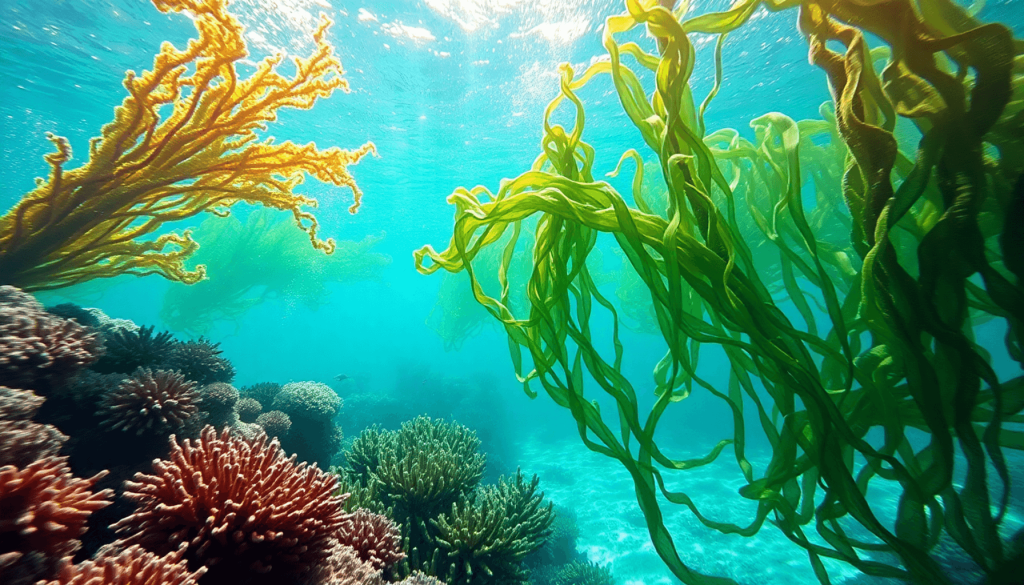
Seaweed is economically valuable worldwide, supporting industries like food production and pharmaceuticals. It also plays a crucial role in marine ecosystems as a habitat, food source, and contributor to carbon fixation.
However, there is a lack of comprehensive studies on seaweed along Aceh’s west coast. This area has the potential for sustainable aquaculture development due to its unique environment and biodiversity. Unfortunately, without research, it is difficult to understand how the seaweed ecosystem functions.
This study aims to address these issues by:
- Examining the Economic Value: Understanding how seaweed contributes to local and global economies.
- Exploring the Ecological Role: Investigating its importance for marine life support and health.
- Filling the Research Gap: Gathering knowledge about the diversity and community structure of seaweed in Aceh’s west coast.
- Promoting Sustainable Practices: Using the findings to encourage environmentally-friendly aquaculture methods.
Through this research, we hope to shed light on the diverse types of seaweed in the region and strengthen community structures that are vital for fostering sustainable aquaculture practices.
Read More: Nutrient-Rich Tropical Seaweeds: Unlocking Potential as Sustainable Ruminant Feed in Indonesia
Methodology
The study was conducted along Aceh’s west coast, which has different types of marine habitats that are perfect for seaweed growth. This area has various environmental conditions, making it an important place to study seaweed diversity.
Sampling Techniques
The researchers used the following methods to collect seaweed samples:
- Quadrat Sampling: They randomly placed quadrats in different locations to systematically collect seaweed samples.
- Diver Surveys: Experienced divers collected samples from various depths to ensure representation of the community structure.
Identification of Seaweed Species
To identify the seaweed species, the researchers employed two techniques:
- Morphological Analysis: They carefully examined the physical characteristics of the seaweeds for initial identification.
- Molecular Techniques: DNA barcoding was used to accurately identify species, especially those that are difficult to differentiate based on morphology.
Data Analysis
The researchers used statistical methods to analyze the data collected:
- Diversity Indices (H’): These indices were calculated to assess species richness and evenness within the community.
- Dominance Index (D): This index was utilized to evaluate the presence of dominant species affecting overall community structure.
This comprehensive approach ensured a thorough understanding of seaweed diversity and distribution patterns, which is crucial for sustainable aquaculture development in Aceh.
Findings on Diversity and Community Structure
The study conducted on Aceh’s west coast revealed important information about the variety of seaweed species in the area. A total of 30 seaweed species were identified, categorized into three major groups:
- Phaeophyta (Brown algae): 12 species
- Chlorophyta (Green algae): 10 species
- Rhodophyta (Red algae): 8 species
This distribution highlights a diverse representation within the local marine ecosystem, suggesting the potential for varied ecological interactions and utility in sustainable aquaculture practices.
Density Measurement
The density of various seaweed species was measured across multiple sampled areas. Key insights include:
- Phaeophyta demonstrated the highest average density, particularly in rocky substrates.
- Chlorophyta showed moderate density, thriving in both rocky and sandy environments.
- Rhodophyta densities were notably lower but concentrated around specific microhabitats with optimal conditions.
This analysis indicates that specific environmental conditions favor certain groups over others, influencing their abundance patterns within the ecosystem.
Diversity Index Analysis
The diversity index (H’) results indicate a moderate level of diversity within the seaweed community on Aceh’s west coast. The calculated H’ value was approximately 2.5, reflecting a balanced mix of species contributing to the overall ecological health. This moderate diversity is crucial for maintaining resilience against environmental changes and stresses.
Community Structure Metrics
In addition to the diversity index, two important metrics were assessed:
- Uniformity Index (E): The uniformity index measured at 0.6 suggests that while there are dominant species, there is also a fair distribution among other taxa. This balance is vital for ecosystem stability.
- Dominance Index (D): With a dominance index score of 0.3, this indicates that no single species overwhelmingly dominates the community structure. A lower dominance score encourages biodiversity, facilitating a more robust marine environment.
Understanding these indices sheds light on community structure dynamics and ecological balance. The insights gained from analyzing these metrics enable researchers and stakeholders to make informed decisions regarding sustainable aquaculture practices, ensuring that any development aligns with promoting biodiversity and ecological integrity on Aceh’s west coast.
Environmental Factors Influencing Seaweed Growth
A detailed assessment of key environmental parameters is crucial for understanding seaweed growth in Aceh’s west coast. The following factors significantly impact the seaweed community:
1. Temperature
Optimal growth typically occurs within a specific temperature range, affecting metabolic rates and photosynthesis.
2. pH Levels
The acidity or alkalinity of water can influence nutrient availability and species composition.
3. Dissolved Oxygen
Adequate oxygen levels are essential for respiration, influencing overall health and growth rates of seaweed.
4. Salinity
Variations in salinity can affect osmoregulation in seaweeds, thus impacting their survival and distribution.
In addition to these water quality measurements, substrate characteristics play a pivotal role in successful cultivation practices. Key aspects include:
- Substrate Type: Rock, sand, or mud substrates provide different anchoring solutions for various seaweed species.
- Composition: The physical and chemical properties of substrates can enhance or hinder growth, particularly regarding nutrient absorption.
Understanding these environmental factors is vital for unlocking the potential of seaweed cultivation on Aceh’s west coast. Such insights contribute to sustainable aquaculture practices that align with the ecological dynamics of the region.
Implications for Sustainable Aquaculture Development in Aceh Province
The findings from this study highlight the potential of Aceh as a center for sustainable seaweed cultivation. With its diverse marine ecosystem, Aceh could become a significant player in the global seaweed market.
Key considerations for enhancing aquaculture practices include:
- Adoption of Integrated Farming Systems: Combining seaweed farming with fish or shrimp cultivation can optimize space and resources, leading to increased productivity.
- Selection of Native Species: Utilizing locally adapted varieties may improve resilience against environmental stresses, ensuring better growth rates and yields.
- Implementation of Floating Raft Systems: This technique reduces competition for substrate and allows for easier management of farmed species.
- Use of Eco-friendly Fertilizers: Organic inputs can enhance growth while maintaining ecological balance, promoting health within the marine environment.
These strategies align with ecological findings, ensuring that seaweed farming practices promote sustainability while meeting economic goals. The focus on sustainable practices not only supports local communities but also contributes to the broader objective of preserving marine biodiversity in Aceh.
Contributions of Ralali Group Towards Seaweed Sector Downstreaming
Ralali Group is dedicated to improving the seaweed industry through its comprehensive B2B platform. This initiative supports industrial downstreaming, which is essential for transforming raw seaweed into valuable finished products. Here are the key ways in which Ralali is making a difference:
1. Integrated Services
The platform offers a range of services that streamline the supply chain for seaweed producers, from procurement to distribution.
2. Market Access
Ralali facilitates greater market access for seaweed producers by connecting them with processing industries, enabling efficient trade opportunities.
In addition to these contributions, Ralali’s platform also has specific features that benefit the seaweed sector:
Request for Quotation (RFQ)
This feature allows seaweed producers to receive competitive pricing from multiple suppliers, optimizing their procurement process.
Ralali Tender
A mechanism that enhances transparency and trust among stakeholders in the supply chain.
Through these features, Ralali fosters collaboration among various actors in the seaweed industry. This collaborative approach not only strengthens national competitiveness but also accelerates economic growth within the sector. By supporting downstream activities, Ralali Group plays a crucial role in unlocking the potential of Indonesia’s seaweed resources.
Conclusion: Unlocking The Potential Of Seaweeds For A Sustainable Future In Aceh And Beyond
Integrating sustainable practices in aquaculture and livestock sectors is essential for long-term environmental health. This approach meets the increasing global demands for both industries, ensuring that ecological balance is maintained while promoting economic growth.
Asparagopsis taxiformis stands out as a promising seaweed species due to its potential for methane reduction in livestock. It serves as a valuable feed resource for ruminants, providing dual benefits that align with sustainability goals.
The findings from the study on seaweed diversity and community structure along Aceh’s west coast highlight significant opportunities for developing sustainable aquaculture. Emphasizing these practices can enhance productivity and contribute positively to the region’s economy while addressing critical environmental issues. Unlocking the potential of seaweeds is not just a local initiative but a step towards achieving sustainable futures globally.
FAQs (Frequently Asked Questions)
Seaweed plays a crucial role in sustainable aquaculture due to its economic value in global markets and ecological significance in marine ecosystems. It supports biodiversity, provides habitat for marine life, and can be cultivated with minimal environmental impact, making it a key component for sustainable practices.
There is a lack of comprehensive studies on the seaweed diversity and community structure on Aceh’s west coast. This research aims to assess the potential for sustainable aquaculture in the region by addressing the limited knowledge regarding species diversity and their ecological roles.
The study employed various methodologies including detailed sampling techniques to collect data on seaweed species, methods for species identification, and statistical approaches for analyzing community structure and diversity indices.
Ralali Group is committed to supporting industrial downstreaming in the seaweed sector through its B2B platform. It facilitates procurement and distribution processes for seaweed producers, enhancing market access and trade opportunities within the industry.
Pingback:Optimizing Seaweed Cultivation: A Comprehensive Analysis of Environmental Factors and Growth Parameters - Indonesia Supplier
Pingback:Nutrient-Rich Tropical Seaweeds: Unlocking Potential as Sustainable Ruminant Feed in Indonesia - Indonesia Supplier