
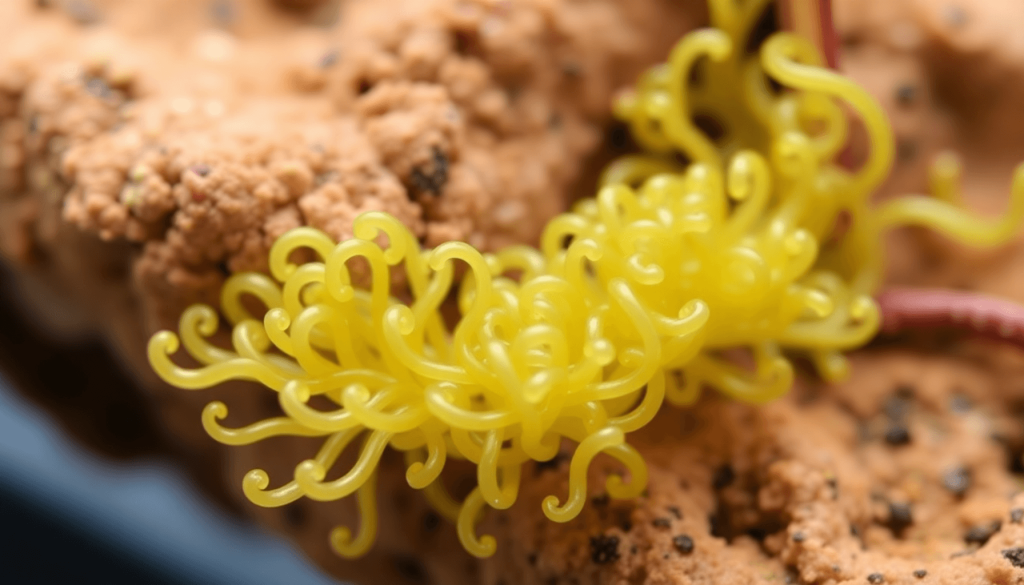
The seaweed industry in Indonesia plays a crucial role in the nation’s economy, contributing significantly to agricultural exports and providing livelihoods for thousands of coastal communities.
Economic Importance
Seaweed cultivation offers economic benefits through job creation, income generation, and export opportunities.
Challenges Faced
Farmers encounter various challenges, including fluctuating market prices, environmental impacts, and limited access to technology.
Research into epiphytic algae presents a promising avenue for addressing these challenges. Epiphytic Gracilaria edulis thrives abundantly in seaweed farms, suggesting potential untapped resources.
Research Motivation
Understanding the diversity and bioactive properties of this species can enhance its value.
Problem Statement
Despite its potential, there is limited knowledge regarding epiphytic seaweed species like G. edulis.
This lack of information has led to unexplored opportunities for utilizing epiphytic algae in various sectors, including food production and pharmaceuticals. Unlocking the potential of Gracilaria edulis could catalyze advancements in the seaweed industry, paving the way for sustainable practices and economic growth in Indonesia.
Methodology
The methodology for this study involved several key steps to ensure a comprehensive analysis of Gracilaria edulis.
1. Sample Collection
Specimens were gathered from Seriwe Bay, Lombok, an area recognized for its diverse aquatic ecosystems. This location provided a rich source of epiphytic seaweed for study.
2. Molecular Identification
The species identification utilized the COX1 marker, a reliable genetic tool. This technique confirmed the identity of G. edulis and ensured accuracy in subsequent analyses.
3. Agar Extraction
Following identification, agar was extracted from the collected samples. Characterization of the agar included assessing yield and gel strength, which are critical for evaluating its potential applications.
4. Phytochemical Analysis
Bioactivity assays were conducted to assess the phytochemical properties of the extracted agar. This involved evaluating various bioactive compounds present in G. edulis, contributing to understanding its health benefits and industrial applications.
Molecular Identification of Epiphytic Gracilaria edulis Using COX1 Sequence Analysis and Phylogenetics
Confirming the species identity of Gracilaria edulis is essential for understanding its ecological and economic significance. COX1 sequence analysis serves as a reliable method for this purpose. The COX1 gene, known for its high conservation across various taxa, provides clear genetic markers that distinguish G. edulis from other closely related species.
Key points in this analysis include:
- Species Confirmation: By comparing the COX1 sequences from samples collected in Seriwe Bay with established databases, researchers can validate the identity of the epiphytic G. edulis. This process ensures accurate classification and reduces misidentification risks.
- Phylogenetic Relationships: The analysis allows for constructing a phylogenetic tree that illustrates the evolutionary relationships between G. edulis specimens. Understanding these relationships offers insights into the diversification and distribution patterns of this species, shedding light on its adaptability to different environments.
The significance of molecular identification extends beyond taxonomy; it plays a crucial role in future research and applications. Accurate species identification facilitates targeted conservation efforts and enhances strategies for sustainable cultivation within the seaweed industry.
Agar Content Analysis in Epiphytic Gracilaria edulis: Yield, Gel Strength, and FTIR Spectroscopy Characterization
The analysis of agar content in Gracilaria edulis reveals significant insights into its potential applications. Key factors to consider include:
1. Agar Yield
The yield of agar extracted from epiphytic G. edulis was found to be comparable with other studies, showcasing its viability as a source of this valuable hydrocolloid. Typical yields range from 25% to 40%, highlighting the efficiency of extraction methods utilized.
2. Gel Strength
The gel strength of the extracted agar is crucial for its application in food and industrial contexts. Studies indicate that G. edulis demonstrates favorable gel strength characteristics, making it suitable for use as a gelling agent in various products.
3. FTIR Spectroscopy Results
Fourier-transform infrared (FTIR) spectroscopy was employed to characterize the composition of the extracted agar. The spectral analysis highlights key functional groups associated with polysaccharides, confirming the presence of agarose and agaropectin. This characterization is essential for understanding the functional properties of agar.
Potential applications of extracted agar include:
- Use as a thickening agent in food products like ice cream and yogurt.
- Application in eco-friendly food packaging materials.
- Utilization as a stabilizer in sauces and seasonings.
These attributes position Gracilaria edulis as a significant contributor to the seaweed industry, paving the way for innovative product development.
Evaluation of Bioactive Properties in Epiphytic Gracilaria edulis: Total Phenolic Content (TPC) and Antioxidant Activity Assays (DPPH & ABTS)
The exploration of bioactive compounds in Gracilaria edulis highlights its potential health benefits. Two key methodologies utilized are Total Phenolic Content (TPC) analysis and antioxidant activity assays, specifically DPPH and ABTS.
1. Total Phenolic Content (TPC)
TPC analysis quantifies phenolic compounds, known for their antioxidant properties. High TPC values indicate a strong potential for health benefits, including anti-inflammatory and anticancer effects.
2. Antioxidant Activity Evaluation
DPPH Assay
This method assesses the ability of extracts to scavenge free radicals. Results often demonstrate significant antioxidant activity, suggesting that G. edulis can combat oxidative stress effectively.
ABTS Assay
Similar to DPPH, the ABTS assay measures the capacity of the seaweed extracts to neutralize free radicals. The findings typically complement DPPH results, reinforcing the notion of G. edulis as a valuable source of antioxidants.
The presence of bioactive compounds positions G. edulis as an essential player in both nutritional and therapeutic applications, showcasing its potential to enhance public health through dietary inclusion or supplementation.
Unlocking the Potential of Epiphytic Gracilaria edulis: Implications for the Seaweed Industry and Future Research Directions
Hydrocolloids, such as agar, carrageenan, and alginate, are essential in the food industry. They act as thickening agents, stabilizers, and gelling agents, improving the texture and quality of various products.
Nutritional benefits from bioactive compounds in Gracilaria edulis include antioxidants that promote health. The high phenolic content in this seaweed supports its potential as a functional food ingredient.
Moreover, G. edulis has significant uses in aquaculture. Its application as feed for marine organisms can enhance growth rates and health, optimizing aquaculture yields.
Summary of Findings
- Diversity of epiphytic G. edulis confirmed through molecular identification.
- Agar content analysis showed promising yield and gel strength.
- Bioactive properties exhibited strong antioxidant activity.
Implications for the Seaweed Industry
The findings suggest substantial implications for the seaweed industry. Enhancing the economic impact through downstream processing can increase value-added products derived from G. edulis.
Future Research Directions
Future studies should focus on:
- Broader exploration of epiphytic species.
- Optimization of agar extraction methods.
- Investigating additional bioactive properties.
Unlocking the potential of Epiphytic Gracilaria edulis presents opportunities for innovation in both food production and aquaculture sectors.
FAQs (Frequently Asked Questions)
Gracilaria edulis is a species of epiphytic macroalgae that plays a significant role in the seaweed industry, particularly in Indonesia. It is valued for its high agar content, which has various applications in food and industrial sectors. The economic importance of cultivating G. edulis lies in its potential to enhance the livelihoods of seaweed farmers and contribute to local economies.
Seaweed farmers in Indonesia encounter several challenges including environmental factors, limited access to technology, and insufficient knowledge about species diversity. These challenges can hinder productivity and limit the potential benefits that could be derived from cultivating species like Gracilaria edulis.
The molecular identification of Gracilaria edulis was performed using COX1 sequence analysis. This method allowed researchers to confirm the species identity and explore its phylogenetic relationship with other specimens, ensuring accurate classification within the broader context of macroalgal diversity.
The study found that Gracilaria edulis exhibits promising agar yield and gel strength compared to other studies. Utilizing FTIR spectroscopy, researchers characterized the agar composition, revealing its potential applications in food products and various industrial uses due to its desirable properties.
Pingback:Seaweed-Associated Bacteria: A Promising Source of Natural Antibacterial Agents Against Skin Pathogens - Indonesia Supplier
Pingback:Seaweed-Based Dodol: Empowering Coastal Communities Through Sustainable Aquaculture and Value-Added Products - Indonesia Supplier